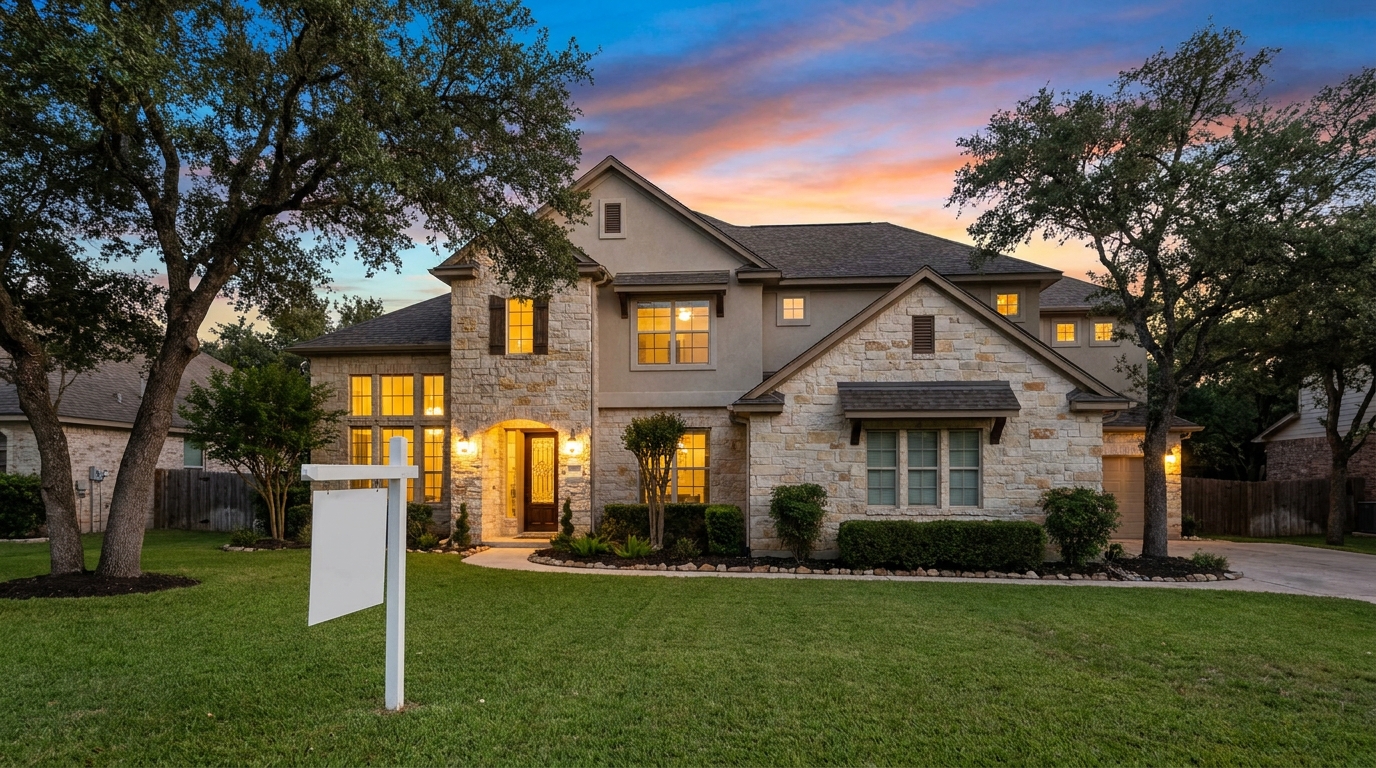
Selling Your San Antonio Home During a PCS in 2026: JBSA Timeline, Remote Selling, and VA Buyer Strategy

Last Updated: April 10, 2026 | By Christopher Beal, U.S. Army Veteran & MRP | eXp Realty | (210) 882-8583
Key Takeaways
- Near JBSA-Lackland (ZIP 78245), the median home sale price is $294,000 with 5.7 months of inventory as of April 2026, per LERA MLS — price before the PCS flood hits in May.
- Remote selling is fully achievable with a limited Power of Attorney, digital closings via Qualia, and an experienced on-the-ground agent in San Antonio.
- VA loan assumptions on 2.75–3.5% rate loans can command a $10,000–$30,000+ premium — market this aggressively if eligible.
- Entitlement substitution lets veteran-to-veteran assumption buyers release your VA entitlement immediately — critical if you plan to use VA at your next duty station.
- Military sellers may qualify for a capital gains exclusion even without meeting the standard 2-year residency test under IRS military service rules.
- The Serve & Save program reduces closing costs at settlement — 1% per year of service, up to 6% maximum.
You just got PCS orders. You have 60 to 90 days — maybe less — to report to your next duty station. Your house in San Antonio still needs to sell. Whether you're at JBSA-Lackland, JBSA-Fort Sam Houston, or JBSA-Randolph, selling during a military move is a different game than a standard civilian real estate transaction. The stakes are higher, the timeline is tighter, and the decisions you make in the first two weeks will determine whether you close before you depart or carry two housing payments while deployed to your new assignment.
This guide covers everything PCS sellers need to know in 2026 — real market data, remote selling logistics, VA buyer strategy, assumable loan marketing, entitlement considerations, and the pricing tactics that actually work during peak PCS season. This is the seller-side playbook.
Ready to get your home listed before PCS season peaks? Call Christopher Beal at (210) 882-8583 or visit veteranrealestatesa.com/free-home-evaluation for a free home valuation — before the market floods in May.
What Does the Spring 2026 JBSA Seller Market Actually Look Like?
The spring 2026 San Antonio market near JBSA installations is a balanced-to-buyer's market — and that means PCS sellers who want a fast, clean close need to come in with a precise strategy, not wishful pricing. Based on LERA MLS data pulled April 10, 2026, here is what the ground looks like in the two primary JBSA seller markets.
| Metric | ZIP 78245 — Near JBSA-Lackland | ZIP 78148 — Near JBSA-Randolph |
|---|---|---|
| Median Sale Price | $294,000 | $273,700 |
| Avg. Price Per Sq Ft | $148.71 | $145.43 |
| Median Days on Market | 84 days | 54 days |
| Avg. List-to-Sale Ratio | 98.3% | 97.4% |
| Active Listings | 803 | 75 |
| Months of Inventory | 5.7 months | 5.0 months |
| Sales in Last 90 Days | 424 sold | 45 sold |
Source: LERA MLS data, January–April 10, 2026.
The Lackland corridor (78245) is a high-volume, high-inventory market — 803 active listings competing for buyers. With 5.7 months of inventory, buyers have options, and homes that are overpriced or poorly presented are sitting. The median home sold at 98.3% of its list price, which means there is very little room for negotiation padding — buyers are not going 10% over ask in this environment. The Randolph market (78148) moves faster at a 54-day median DOM, but it is also a smaller, more price-sensitive market. Both markets reward sellers who price sharply and show well from day one.
What Is the PCS Seller Timeline From Orders to Closing?
Here is the step-by-step timeline every JBSA PCS seller should follow:
Days 1–7: Receive Orders, Engage Agent Immediately. Contact a San Antonio military relocation specialist the same week you receive orders. Do not wait until you "feel ready." A home valuation, pre-listing repair walkthrough, and pricing strategy take time. The earlier you engage, the more control you have over the timeline. Schedule a free home evaluation at veteranrealestatesa.com/free-home-evaluation.
Days 7–14: Pre-Listing Preparation. Professional photos and video must be scheduled while furniture is still in the home. Patch, paint, and deep-clean with military precision — buyers notice everything. If you have a VA loan at a rate below 4%, identify the assumable rate with your lender so it can be marketed. Execute a limited Power of Attorney (POA) with a real estate attorney authorizing your agent or a designated representative to act on your behalf after departure.
Days 14–21: Go Live on LERA MLS. Your agent lists the home on LERA MLS (formerly SABOR MLS), syndicates to Zillow, Realtor.com, and military housing portals. VA loan assumptions and Serve & Save program eligibility should be called out in the listing description. Your agent handles all showing scheduling and follow-up remotely from this point.
Days 21–75: Active Marketing, Showings, and Negotiation. Your agent manages all showings, feedback, and offers on your behalf. You review and sign all documents digitally. Use DocuSign or a platform like Qualia for all transaction documents. Stay in close communication — offer review, counter-offer negotiations, and inspection response windows are typically 24–72 hours.
Days 75–90+: Under Contract and Closing. VA closings require a VA appraisal, which adds roughly 7–14 days to the timeline versus a conventional close. Conventional and cash closings can be 21–30 days. Your agent coordinates with the title company. For remote closings, Qualia's platform allows all parties to sign documents remotely with a remote online notary — no in-person appearance required in Texas. Proceeds are wired to your bank account wherever you are stationed.
What Does a Remote Selling Checklist Look Like for PCS Sellers?
Remote selling from a new duty station is a logistics exercise — the more you set up before you depart, the fewer emergencies you face at 2 a.m. from a time zone 2,000 miles away. Below is a practical checklist built specifically for JBSA sellers who will be managing the sale remotely.
- Limited Power of Attorney (POA) — Draft with a Texas real estate attorney before departure. The POA should specifically authorize real estate transaction signing. A generic military POA may not be sufficient for all title companies.
- Professional Photos + Video Before Departure — Non-negotiable. Schedule the photographer before furniture is removed. Virtual staging can supplement, but original photos with furniture always outperform empty-home shoots.
- Smart Home Monitoring — Install a Ring doorbell or Nest camera at front and back entry points. You receive showing alerts and can verify the home is being locked up properly after each showing.
- Trusted On-Site Contact — Identify a neighbor, family member, or property manager who can check on the home weekly, report any issues (broken sprinklers, HVAC alarms, storm damage), and do a quick pre-showing walkthrough if needed.
- Digital Document Signing Setup — Confirm your agent uses DocuSign or a similar platform for all documents. Open and test the platform before you leave so you are not troubleshooting it during a live offer countdown.
- Remote Online Notary Authorization — Texas allows Remote Online Notarization (RON). Confirm with your title company (Qualia is widely used in San Antonio) that RON is available for your closing. This eliminates any need to travel back to San Antonio to sign.
- Utility Management Plan — Keep utilities on through closing (buyers inspect with utilities active). Set up auto-pay and confirm the accounts are in your name through the anticipated close date.
- Landscaping & Exterior Maintenance — Arrange weekly lawn service through closing. Curb appeal matters for every showing, even if you cannot see it. Budget $150–$250/month.
- Coordinated Move-Out and Staging Photos — Schedule the photographer to arrive during, not after, your military move-out. Photograph the home with at least key furniture pieces before the movers arrive, or hire a stager to furnish post-move.
Why Should JBSA Sellers Welcome VA Loan Offers?
The biggest myth in San Antonio real estate is that VA loan offers are risky for sellers. This is simply not true — and believing it costs PCS sellers money. In military markets like those surrounding JBSA-Lackland, JBSA-Fort Sam Houston, and JBSA-Randolph, VA buyers make up a significant share of qualified demand. Refusing VA offers in these markets is refusing your best buyers.
Why VA Buyers Are Your Strongest Buyers: VA borrowers are pre-screened through a rigorous income verification and credit process with the Department of Veterans Affairs. Military income is guaranteed by the federal government — W-2 military pay is among the most stable income streams a lender can underwrite. VA buyers with PCS orders have a hard deadline to close, which means they are highly motivated and unlikely to drag out a transaction. According to VA.gov, VA loan close rates are comparable to conventional loans when working with experienced VA lenders.
The VA Appraisal Myth: Many sellers fear the VA appraisal will undervalue the home. In reality, the VA appraisal establishes a Minimum Property Value (MPV) that protects the transaction. If the VA appraisal comes in at value, you have third-party validation of your price — a strong negotiating anchor. If it comes in below your list price, you and the buyer have two options: negotiate to the appraised value, or the buyer brings cash to cover the gap. This is the same dynamic as any appraisal contingency in a conventional transaction.
VA Minimum Property Requirements (MPRs): The VA does require that homes meet basic safety, structure, and habitability standards — MPRs. These are not onerous for a well-maintained home. Address any deferred maintenance (roof, HVAC, electrical, plumbing) before listing — issues found in a VA appraisal will be required repairs, not just negotiable items. Learn more at veteranrealestatesa.com/va-home-loans.
How Can You Market a VA Assumable Loan as a Selling Feature?
If you purchased your San Antonio home with a VA loan between 2020 and early 2023, your rate is almost certainly between 2.75% and 3.5%. In a market where new buyers are facing rates of 6.5–7.0%, your locked-in rate is a powerful selling asset — but only if you market it correctly.
A VA loan assumption allows a qualified buyer (veteran or non-veteran, with lender approval) to take over your existing mortgage at your original interest rate. On a $280,000 loan at 3.0% versus 6.75%, the buyer saves approximately $550 per month in principal and interest — over $6,600 per year, or more than $195,000 over the remaining loan term. That savings value translates directly into purchase price premium.
Real assumption buyers in today's San Antonio market are paying $15,000–$30,000 above comparable non-assumable homes when the rate differential is significant. To market an assumable VA loan effectively, your listing must call out: (1) the current interest rate, (2) the current loan balance, (3) whether only VA-eligible buyers or all buyers may assume, and (4) the estimated monthly payment with the assumable rate versus a new-market-rate loan. Visit veteranrealestatesa.com/va-home-loans for more on VA assumptions and see our detailed VA Assumable Loans guide.
What Happens to Your VA Entitlement When a Buyer Assumes Your Loan?
This is the single most important and most misunderstood consideration for military sellers who have a low-rate VA loan. Your decision on entitlement affects your ability to use VA financing at your next duty station — and a wrong move can tie up your entitlement for years.
What Happens by Default: When a buyer assumes your VA loan, your entitlement (the VA guarantee tied to that loan) stays committed to that mortgage until it is paid off — which could be 15–25 years. If your entitlement is tied up, you may not have full entitlement available for a new VA purchase at your next station. With partial entitlement, you may face a VA funding fee or a down payment requirement.
Entitlement Substitution: If the buyer is a qualified veteran with sufficient VA entitlement, they can substitute their entitlement for yours at the time of assumption. This requires VA approval and lender processing. When substitution is approved, your entitlement is released immediately — you can use your full VA benefit at your next assignment without waiting for the old loan to pay off. This is the preferred path for military sellers who plan to purchase again using VA financing.
When to Accept Non-Veteran Assumption: If the buyer is not a veteran (civilians can also assume VA loans with lender approval), entitlement substitution is not available. Your entitlement remains tied up until the loan is paid off. If you have remaining or bonus entitlement — or if your next purchase will be financed conventionally — this may still be an acceptable trade-off for a higher sale price. Always work through this calculation with a VA-specialized lender before agreeing to an assumption. Explore your options at veteranrealestatesa.com/military-relocation.
Ready to review your VA entitlement situation before listing? Call Christopher Beal at (210) 882-8583. He will walk through your entitlement status and assumption options before you sign anything.
How Should PCS Sellers Price in Spring 2026 Before the Market Floods?
Spring PCS season — April through August — is the most competitive listing environment San Antonio sees all year. Every military family receiving orders simultaneously becomes both a potential buyer AND a competitor seller in your ZIP code. Understanding this dual wave is the key to timing and pricing your sale correctly.
In the Lackland corridor (ZIP 78245), there are already 803 active listings as of early April. By May, that inventory typically jumps by another 15–25% as the first wave of PCS orders generates new listings. A home that is already positioned and priced well in April captures the early-mover buyer pool — the buyers who have been waiting since January and have pre-approval letters ready.
Pricing Tactics That Work in This Market:
- Price at or slightly below the median, not at the median active list price. The median active list price in 78245 is $319,500 — but the median SOLD price is $294,000. The gap between those two numbers represents overpriced homes sitting on the market. Price close to $294,000–$300,000 to be in the range where buyers are actually transacting.
- Do not test the market. With a 60–90 day PCS timeline, you do not have 30 days to sit at a high price and then reduce. Every price reduction signals weakness and invites low offers. One right price beats three price cuts.
- Factor in the VA appraisal floor. If you expect VA offers (which you should, in a JBSA market), price within a range that a VA appraisal can support. An appraisal gap on a VA loan is harder for buyers to bridge — your VA buyer may not have $10,000–$20,000 in cash sitting around.
- List on a Tuesday or Wednesday. Homes listed midweek have higher showing volume through the following weekend. Friday listings miss the early-week search window and may sit through their first weekend without significant activity.
What Are the Tax Implications of Selling Your Home During a PCS?
Military sellers have significant tax advantages under federal law that most civilian homeowners do not — and failing to claim them is a costly mistake. Here is what every JBSA PCS seller should know before closing.
Capital Gains Exclusion — Extended Military Window: Under the standard IRS Section 121 rule, you must have owned and used the home as your primary residence for at least 2 of the last 5 years to exclude up to $250,000 in capital gains (single) or $500,000 (married filing jointly). For active duty service members, this test can be suspended for up to 10 years of qualified official extended duty under military service exceptions built into the tax code. If you were ordered away from your home before completing the standard 2-year residency, you may still qualify for the full exclusion. Per the IRS guidance on home sale tax topics, this is one of the most significant military-specific tax benefits available. Always consult a tax professional with military tax expertise — VITA (Volunteer Income Tax Assistance) on every JBSA installation provides free tax preparation to military members and their families.
Property Tax Prorations at Closing: In Texas, property taxes are paid in arrears — meaning the 2026 tax year is due in January 2027. At closing, Texas title companies prorate property taxes based on the days you owned the home during the tax year. The buyer's side of the HUD/closing disclosure will show a credit to you for taxes not yet paid. You will not write a check for 2026 taxes at closing — the proration credit covers your share. Verify the proration calculation with your title company.
Moving Expense Deductions: The Tax Cuts and Jobs Act of 2017 eliminated moving expense deductions for most taxpayers — but active duty military members moving under official orders retained the deduction. Unreimbursed moving expenses related to your PCS may still be deductible on your federal return. Keep all receipts for expenses not covered by your PCS entitlement.
How Does the Serve & Save Program Reduce Costs for Military Sellers?
The Serve & Save program through Veteran Real Estate San Antonio: The Beal Group directly reduces closing costs for military sellers and buyers based on years of service. Veterans earn 1% per year of military service, up to a maximum of 6%, applied toward closing costs at settlement — which is the precise moment when every dollar counts on a PCS timeline.
On a $295,000 San Antonio home sale, a veteran with 6 or more years of service could see up to $17,700 in closing cost reductions. For a PCS seller managing overlapping housing costs (new-station rent or mortgage while carrying the San Antonio home), this reduction directly improves cash flow at a critical time. Visit veteranrealestatesa.com/serve-and-save to calculate your exact benefit based on years of service.
Note: Serve & Save reduces closing costs — it is not a cash rebate or cash-back program. The benefit is applied at the closing table toward your settlement charges.
What Should PCS Sellers in San Antonio Absolutely NOT Do?
These are the avoidable mistakes that cost PCS sellers time, money, and stress — and they happen every PCS season to families who did not have the right guidance from the start.
❌ Don't list with a random agent at your new duty station. An agent in Virginia Beach or Fort Carson has zero presence in the San Antonio market. They do not know 78245 pricing, JBSA buyer demand patterns, or which title companies process VA assumptions fastest. You need boots on the ground in San Antonio — an agent who physically attends inspections, manages showings, and knows the neighborhood-level data. Refer your new-station buyer's side to veteranrealestatesa.com/military-relocation for a trusted referral network.
❌ Don't sign a 6-month listing agreement when you need to sell in 60 days. Standard listing agreements are often 6 months by default. A PCS seller with a report date in 60–75 days should negotiate a 90-day listing with clear performance benchmarks — showing activity requirements, price reduction triggers if no offer by day 30, and an early termination clause if targets are not met. Your timeline is your leverage — use it.
❌ Don't leave the house empty without taking staged photos first. Empty homes feel smaller, cold, and uninviting on photos and in person. Statistically, vacant homes sell slower and for less than occupied or staged homes. Budget $1,500–$3,000 for a professional stager who can furnish key rooms, or a virtual staging service that can overlay furniture on your already-taken photos. Get the photos done while your furniture is still there — or hire the stager before the first showings begin.
❌ Don't reject VA offers out of hand. As discussed above, VA buyers in the JBSA market are often the most qualified, most motivated buyers available. Refusing VA offers in a 5.7-month inventory market narrows your buyer pool by 40–50% and extends your days on market. In a PCS timeline, every extra day on market costs money.
❌ Don't ignore entitlement substitution. If you plan to use VA financing at your next duty station and you have a veteran buyer who wants to assume your loan, entitlement substitution is a critical conversation to have before you sign the assumption agreement — not after. Once the assumption closes without substitution, your entitlement is committed to the old loan.
Ready to sell your San Antonio home before your PCS departure? Christopher Beal is a U.S. Army veteran and Military Relocation Professional (MRP) who has guided 293+ military families through exactly this process. He handles the ground game in San Antonio so you can focus on your move. Call (210) 882-8583, visit veteranrealestatesa.com/free-home-evaluation, or review client experiences at veteranrealestatesa.com/reviews.
Frequently Asked Questions
How long does it take to sell a home in San Antonio during PCS season?
In the JBSA-Lackland area (ZIP 78245), homes are selling in a median of 84 days on market as of April 2026, based on LERA MLS data. Near JBSA-Randolph (ZIP 78148), the median is faster at 54 days. Pricing competitively from day one — especially before the April–August PCS flood — can cut that timeline significantly. Budget 60–90 days from listing to closing to be safe.
Can I sell my San Antonio home remotely after I've already PCS'd?
Yes. Remote selling is entirely possible using a limited Power of Attorney (POA) that authorizes your agent or a designated representative to sign on your behalf. Digital closings via platforms like Qualia allow you to review and sign documents electronically from your new duty station. Your agent manages showings, negotiations, and inspections on the ground. Coordinate with a military-experienced real estate attorney to set up the POA before you depart.
Should I accept VA loan offers on my home?
Yes — VA offers are often your strongest offers. VA buyers are pre-screened through the military's income verification process, making them highly qualified. The VA appraisal actually protects the seller by establishing a floor on value. The myth that VA loans are harder to close is outdated; with an experienced VA lender, VA loans close at rates comparable to conventional. VA buyers also tend to be motivated military families on PCS orders with hard deadlines — they close on time.
What is VA loan assumption and how does it help me sell faster?
If you bought your home with a VA loan at a rate between 2.75% and 3.5%, a buyer can assume that low rate instead of taking a new loan at today's 6–7% rates. This is a rare and powerful selling feature that can command a price premium of $10,000–$30,000+ over market value because the buyer captures years of interest savings. You must market the assumable rate prominently in your listing to attract qualified assumption buyers.
What happens to my VA entitlement if a buyer assumes my VA loan?
Your VA entitlement stays tied to the assumed loan until the buyer pays it off — unless you pursue entitlement substitution. Substitution means the assuming buyer (if they are a veteran) substitutes their own VA entitlement for yours, releasing your entitlement immediately so you can use it to buy at your next duty station. If the buyer is not a veteran, your entitlement remains tied up. This is a critical planning point — discuss it with a VA-specialized lender before agreeing to an assumption.
Do military sellers qualify for any capital gains tax exemptions?
Yes. Under the Military Spouses Residency Relief Act (MSRRA) and IRS Section 121 exceptions for military service, active duty service members can suspend the standard 2-of-5-year ownership and use test for up to 10 years of qualified official extended duty. This means military sellers who were ordered to PCS before meeting the standard 2-year residency requirement may still qualify for the $250,000 (single) or $500,000 (married filing jointly) capital gains exclusion. Always consult a tax professional with military tax expertise for your specific situation.
How should I price my home during PCS season in San Antonio?
Price aggressively from day one. April through August, the JBSA market sees a surge of military families receiving orders simultaneously — meaning dozens of competing listings hit your same ZIP code at the same time. The sellers who price 2–3% below the median capture the first wave of buyer attention and often attract multiple offers before the inventory flood. In the Lackland area (ZIP 78245), the current median sale price is $294,000 with homes selling at 98.3% of list price. A home priced at $289,000–$295,000 positioned well below the median $319,500 active list price will generate urgency.
What is the Serve & Save program for military sellers?
The Serve & Save program through Veteran Real Estate San Antonio reduces closing costs for military sellers and buyers. Veterans earn 1% per year of service, up to a maximum of 6%, applied toward closing costs at settlement. This is not a cash rebate — it directly reduces what you pay at the closing table, improving your net proceeds. Contact Christopher Beal at (210) 882-8583 to learn exactly how much you qualify for based on your years of service.
How do I manage showings and staging if I've already moved out?
The key is getting professional photos and video taken before you depart — preferably with furniture still in place, or using professional virtual staging. Install a lockbox and coordinate with your agent to manage all showings remotely. Use smart home technology (a Nest or Ring doorbell with camera) to monitor access and receive showing notifications. Brief a trusted neighbor or property manager to do quick walkthroughs before showings. Empty homes show poorly and statistically sell for less — budget $1,500–$3,000 for a stager or virtual staging service.
What mistakes do PCS sellers most commonly make?
The three most common and costly mistakes: (1) Listing with a random agent at their new duty station who has no presence in San Antonio — you need boots on the ground here. (2) Signing a 6-month listing agreement when PCS orders require you to sell in 60–90 days — negotiate a 90-day listing with clear performance benchmarks. (3) Leaving the home completely empty without staging photos taken first — empty homes feel smaller, show poorly, and sell slower. A PCS-experienced San Antonio agent handles all three of these correctly from day one.
About Christopher Beal
Christopher Beal is a U.S. Army veteran, REALTOR with eXp Realty, and Military Relocation Professional (MRP) serving San Antonio and the greater JBSA community. He is a VAREP member (Veterans Association of Real Estate Professionals — HUD-approved nonprofit), San Antonio Business Journal Top 25 Real Estate Teams #13 (2024) & #14 (2025), 3x Platinum Top 50 Agent, 6x eXp ICON Agent, Five Star Real Estate Agent 2026, and MRP certified through the National Association of Realtors. He has served 293+ families and closed $112M+ in career volume. TREC #723559.
Call: (210) 882-8583 | Web: veteranrealestatesa.com/about-us | Reviews: veteranrealestatesa.com/reviews
Categories
- All Blogs (355)
- Alamo Heights (4)
- awards (4)
- Best Neighborhoods in San Antonio (13)
- Buyer (16)
- Buyer Education (87)
- Community Events (4)
- Hill Country (17)
- JBSA (46)
- Local Guide (6)
- Luxury (28)
- Luxury Real Estate (26)
- Market Trends (19)
- Market Update (14)
- Military Relocation (114)
- Military Retirement (3)
- Mortgage (19)
- Neighborhood Guides (19)
- neighborhoods (5)
- New Construction (16)
- PCS (42)
- Real Estate (40)
- reviews (3)
- San Antonio (53)
- San Antonio Lifestyle (4)
- San Antonio Market (5)
- San Antonio Neighborhoods (45)
- San Antonio Real Estate (98)
- San Antonio, Veterans Resources, VA Loans (5)
- Seller (55)
- VA Home Loans (30)
- VA Loans (35)
- Va Loans & Financing (27)
- Veterans (10)
- Veterans Resources (40)
Recent Posts