VA Loan Home Inspection vs VA Appraisal Explained

| VA Loan Home Inspection vs VA Appraisal Explained By Christopher Beal | Veteran Real Estate San Antonio: The Beal Group | August 14, 2026 |
If you are buying a home in San Antonio with a VA home loan, two terms will come up early in the process: the VA appraisal and the home inspection. Many veterans assume they are the same thing or that the VA appraisal covers everything a buyer needs to know about the property. That assumption can cost you thousands of dollars in surprise repairs after closing. As a U.S. Army veteran who has helped more than 325 military and veteran families close on homes in the San Antonio area, I walk every client through both of these steps so there are no surprises at the closing table. This guide breaks down exactly what each one does, what it costs, who orders it, and why you likely need both.
What Is a VA Appraisal and Why Does the VA Require It?
A VA appraisal is a mandatory step in every VA purchase loan. Your lender orders the appraisal through the VA portal, and a VA-assigned appraiser visits the property. The buyer does not get to choose the appraiser. According to VA Pamphlet 26-7, Chapter 12 (the VA Lenders Handbook), the appraisal serves two purposes: it determines the fair market value of the home, and it verifies the property meets VA Minimum Property Requirements (MPRs). Those MPRs ensure the home is safe, structurally sound, and sanitary.
The appraiser will look at the overall condition of the home, check for obvious safety hazards like peeling lead-based paint or missing handrails, confirm there is adequate heating and a functioning roof, and compare the property to recent comparable sales to establish a value. In San Antonio, where the median home price currently sits between $295,000 and $315,000, the VA appraisal fee typically runs $450 to $650 depending on the area and property type. The seller can pay this fee as part of their concession allowance (up to 4% of the purchase price), or the buyer can cover it.
What the appraiser does not do is run the dishwasher, test every electrical outlet, crawl through the attic, or check whether the HVAC system actually heats and cools properly. The VA appraisal is not a home inspection. That distinction matters more than most buyers realize.
What Does a Home Inspection Cover That the VA Appraisal Does Not?
A home inspection is a thorough, operational examination of the property. You hire a licensed home inspector of your choosing, and they spend two to four hours going through every major system in the house. A standard inspection covers:
- HVAC system - heating and cooling performance, age and condition of the unit, ductwork
- Electrical - panel capacity, wiring condition, GFCI outlets, grounding
- Plumbing - water pressure, drain function, water heater, visible leaks, supply line condition
- Foundation - cracks, settling, moisture intrusion, structural movement
- Roof - shingle condition, flashing, gutters, estimated remaining life
- Appliances - operational testing of dishwasher, oven, range, garbage disposal, microwave
- Attic and insulation - ventilation, moisture, insulation depth
- Windows and doors - seals, operation, safety glass where required
- Exterior - grading, drainage, siding condition, fencing
In the San Antonio market, a home inspection typically costs $350 to $500+ depending on the size and age of the home. While the VA does not require a home inspection, it is strongly recommended. Skipping it to save a few hundred dollars can leave you exposed to repair bills in the thousands once you have the keys. If you are following the VA home buying guide I put together for San Antonio buyers, you will see that scheduling the inspection during the option period is one of the most important steps in the process.
How Do the VA Appraisal and Home Inspection Compare Side by Side?
| Feature | VA Appraisal | Home Inspection |
|---|---|---|
| Required? | Yes - required by the lender on every VA loan | No - optional but strongly recommended |
| Who orders it? | Lender orders through the VA portal | Buyer hires their own inspector |
| Who chooses the professional? | VA assigns the appraiser - buyer cannot choose | Buyer selects their preferred inspector |
| Cost in San Antonio | $450-$650 | $350-$500+ |
| What it covers | Fair market value + VA Minimum Property Requirements (safe, sound, sanitary) | HVAC, electrical, plumbing, foundation, roof, appliances, attic, exterior - detailed operational check |
| Timeline | Typically 7-14 business days after order | Scheduled within the option period (usually 7-10 days) |
| Who pays? | Buyer or seller (seller can pay within 4% concession limit) | Buyer pays |
| If issues are found | MPR repairs must be completed before closing | Buyer can negotiate repairs, request seller credits, or walk away during option period |
What Happens If the VA Appraisal Finds Problems?
When the VA appraiser identifies issues that violate Minimum Property Requirements, those repairs become mandatory. The loan cannot close until the problems are corrected. Common MPR issues in San Antonio include peeling paint on older homes, missing smoke detectors, exposed wiring, standing water near the foundation, and roofing damage. The seller is typically asked to make these repairs, though the buyer and seller can negotiate who covers the cost.
If the appraisal comes in below the contract price, you have several options. The VA uses a process called Tidewater - if the appraiser anticipates the value will come in low, the lender is notified and given the opportunity to submit additional comparable sales data before the final report is issued. If the value still comes in low after the report, the buyer or their agent can file a Reconsideration of Value (ROV) with supporting comparable sales from the LERA MLS. Other options include renegotiating the purchase price with the seller, paying the difference out of pocket, or walking away from the deal. Understanding VA funding fee calculations is also important here because the fee is based on the loan amount, which changes if the purchase price is renegotiated.
What Happens If the VA Appraisal Comes In Below the Purchase Price?
This is the single most misunderstood protection in the VA program. The home inspection and the VA appraisal both look at the property, but only the appraisal sets a dollar value, and only the appraisal triggers the escape clause. If the VA-assigned appraiser issues a Notice of Value below what you agreed to pay, you get a decision point that conventional buyers have to negotiate for.
The formal name is the Amendatory Clause and Escape Clause, and the language is set by the U.S. Department of Veterans Affairs, not by your lender or your agent. It states that the veteran buyer is not obligated to complete the purchase if the contract price exceeds the reasonable value established by the VA. No seller can strike it, and no listing agent can require you to waive it as a condition of acceptance.
Your Four Options on a Low Notice of Value
- Renegotiate to the appraised value. The most common outcome in the current Bexar County market. The seller reduces the price to the VA number and the loan proceeds unchanged.
- Cover the gap in cash. You may pay the difference out of pocket, but the VA will not finance above the Notice of Value, and the cash you bring does not count toward reserves.
- Request a Reconsideration of Value. Your lender submits new comparable sales the appraiser did not use. This is where a comp packet built from live SABOR data is worth more than an argument.
- Invoke the escape clause and terminate. Earnest money is returned. Use this when the gap is too wide to close and the seller will not move.
What the 2026 San Antonio Market Means for Your Odds
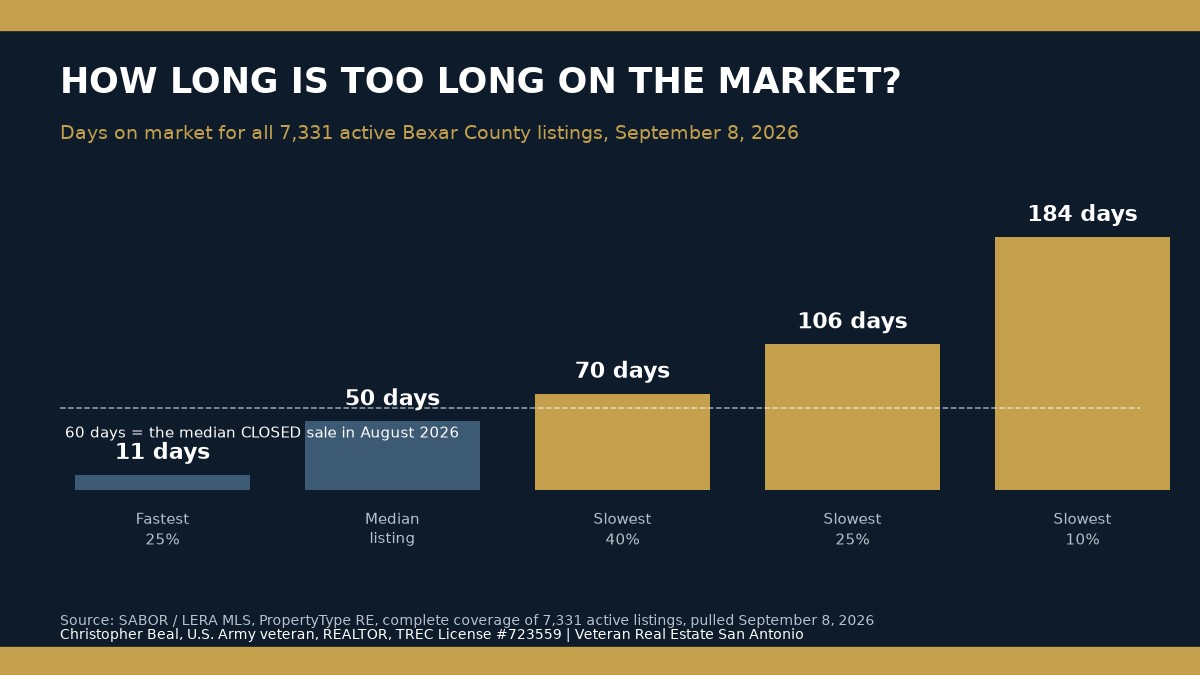
Appraisal gaps are less common in a balanced market than they were in the 2021 to 2022 run-up. Across Bexar County in the ninety days ending August 14, 2026, the median closed sale price sat at $285,250 while the median list price on active inventory sat at $284,699. Sold homes averaged roughly 82 days on market against about 60 days for the standing active inventory.
When active list prices and closed sale prices converge like that, appraisers have recent, defensible comparables to work from and fewer contracts blow past reasonable value. The gaps that do show up in San Antonio now tend to cluster in two places: new construction, where a builder's base plus options exceeds resale comps in the same subdivision, and homes that sat long enough for a seller to anchor on a spring list price the market has already moved past.
| Situation | Escape clause applies? | What is protected |
|---|---|---|
| Notice of Value below contract price | Yes | Full earnest money returned |
| Appraisal notes MPR repairs, value is fine | No | Handled as a repair negotiation, not a termination |
| Home inspection finds major defects | No | Texas option period is your exit, not the escape clause |
| Builder design-center deposit on a Cibolo or Schertz build | No | Non-refundable per the builder contract, separate from earnest money |
Source: LERA MLS Bexar County closed and active data pulled August 14, 2026, and U.S. Department of Veterans Affairs escape clause guidance.
The New Construction Trap Most Buyers Miss
The escape clause returns your earnest money. It does not return money you gave a builder. On a Cibolo, Schertz, or Converse new build, the design-center selections and lot premiums you paid up front sit under the builder's own contract. If the VA value comes in under the base-plus-options total and you terminate, the earnest money held at title comes back and the design-center money generally does not.
That is why a VA buyer signing a new construction contract should be pricing the build against resale comps in the same subdivision before writing the first deposit check, not after the Notice of Value arrives. My walkthrough on using a VA loan for new construction in 2026 covers how builder incentives and appraised value interact.
If You Are on PCS Orders, the Clock Is the Real Risk
For a JBSA family, a low appraisal is a schedule problem before it is a money problem. A Reconsideration of Value adds days. A renegotiation adds days. A termination sends you back to square one with a report date that has not moved. If you are closing against orders to Lackland, Randolph, or Fort Sam Houston, decide your gap ceiling before you write the offer so the decision takes hours instead of a week.
Practical version: know the number you will cover in cash, know the number where you terminate, and have your agent pull the comps for a Reconsideration of Value before the appraisal is even ordered. For the full mechanics of a low appraisal and how a Reconsideration of Value is actually built, see my guide to what to do when a San Antonio appraisal comes in low. For what the appraiser is checking on the property itself, see VA appraisal requirements in San Antonio.
The VA publishes the escape clause language itself at benefits.va.gov, and the Consumer Financial Protection Bureau explains the underlying loan protections at consumerfinance.gov.
What Happens If the Home Inspection Reveals Issues?
Unlike the VA appraisal, home inspection results do not automatically stop the transaction. In Texas, the buyer typically has a 7- to 10-day option period (secured by an option fee of $100 to $500) during which they can conduct inspections and decide whether to proceed. If the inspection reveals problems, you have several paths:
- Negotiate repairs - ask the seller to fix specific items before closing
- Request a seller credit - the seller reduces the price or provides a closing cost credit so you can handle repairs yourself
- Accept the property as-is - if the issues are minor and you are comfortable
- Terminate during the option period - you lose only the option fee, not your earnest money
This is where having an experienced agent matters. I help my clients prioritize inspection findings - separating safety and structural concerns from cosmetic issues - and build a repair request that keeps the deal moving forward. If you are considering a property that might need extra negotiation, understanding VA loan eligibility requirements and VA closing costs will help you budget for the full picture.
Can You Skip the Home Inspection on a VA Loan?
Technically, yes. The VA does not require a home inspection. But I strongly advise against skipping it. The VA appraisal checks for minimum safety standards - it does not tell you whether the air conditioning will make it through a San Antonio summer, whether the water heater is near the end of its life, or whether the foundation has hairline cracks that signal future movement. In a market where homes are selling in the $295,000 to $315,000 range, a $350 to $500 inspection is a small investment compared to the cost of replacing an HVAC system ($5,000 to $12,000) or addressing foundation issues ($3,000 to $15,000+).
Some buyers coming from out of state on a military relocation may be tempted to skip the inspection to speed up the process. I always recommend scheduling it even on a tight PCS timeline. A good inspector can complete the work in a single visit, and the report gives you leverage and peace of mind. Many of the common VA loan myths stem from confusing what the appraisal covers with what the inspection covers.
How Does the VA Appraisal Process Work Step by Step?
Here is how the VA appraisal typically unfolds in a San Antonio transaction:
- Contract is executed - once you and the seller agree on price and terms
- Lender orders the appraisal - through the VA's online portal; neither the buyer nor the agent selects the appraiser
- Appraiser visits the property - typically within 5-10 business days of the order
- Appraiser evaluates MPRs and market value - checks safety, structure, and sanitation; compares to comparable sales
- Tidewater notification (if needed) - if the value may come in low, the lender is notified and can submit additional comps
- Final report issued - includes the appraised value and any required repairs
- Repairs completed (if applicable) - seller or buyer addresses MPR deficiencies before closing
- Loan proceeds to underwriting - with the appraisal cleared
The entire process typically takes 7 to 14 business days from the order date. If you are working through the VA loan pre-approval process, your lender will explain the timeline during your initial consultation. Getting pre-approved before you start shopping puts you in the strongest position when it comes time to make an offer.
Should You Get Both a VA Appraisal and a Home Inspection?
Absolutely. The VA appraisal protects the lender by confirming the home is worth the loan amount and meets minimum standards. The home inspection protects you by giving a complete picture of the property's condition. Think of it this way: the appraisal tells you and the bank what the house is worth; the inspection tells you what might break after you move in.
Between the two, you are looking at roughly $800 to $1,150 in combined costs for a typical San Antonio home. That is less than 0.4% of the purchase price on a median-priced home, and it gives you both financial protection and negotiating power. If you are also exploring options like VA assumable loans, note that a new appraisal is typically required for assumptions as well, and a home inspection is just as important in those transactions.
My Serve & Save program reduces closing costs for veterans, active-duty service members, first responders, and educators - savings that can help offset these upfront inspection and appraisal expenses.
About the Author: Christopher Beal
Christopher Beal is a U.S. Army veteran and the Owner of Veteran Real Estate San Antonio, a Beal Group practice brokered by eXp Realty (TREC License #723559). A Military Relocation Professional (MRP) and VAREP member, he is a 7-time eXp Realty ICON agent, winner of Best Real Estate Agency in the 2026 Best of San Antonio Readers' Choice (San Antonio Current, 100,000+ voters), and a 3x San Antonio Business Journal Top 25 Individual Agent (#13 in 2024, #14 in 2025, #20 in 2026). His recognition also includes 3x Platinum Top 50, 2x RateMyAgent Agent of the Year, 2x Real Producers Top 100, Five Star Professional (2026), and a RealTrends 2026 ranking. He has helped 325+ families, closed more than $125M in career volume, and holds 5.0 stars across 370+ verified reviews, working almost exclusively with military and veteran buyers and sellers across Bexar, Comal, Kendall, Medina, and Bandera counties, with a focus on VA loans, PCS moves, and homebuying near JBSA-Lackland, JBSA-Randolph, and Fort Sam Houston. He has walked veteran buyers through low Notice of Value calls, Reconsideration of Value packets, and Tidewater notices on both resale and new construction across the San Antonio market. He can be reached at (210) 882-8583.
Frequently Asked Questions
Is a home inspection required for a VA loan?
No. The VA does not require a home inspection. The only property-related requirement is the VA appraisal, which the lender orders through the VA portal. However, a home inspection is strongly recommended because it provides a detailed evaluation of the home's systems and condition that the appraisal does not cover.
What is the difference between VA Minimum Property Requirements and a home inspection?
VA Minimum Property Requirements (MPRs) are basic safety and structural standards the appraiser checks - things like a functioning roof, safe electrical systems, adequate heating, and no lead paint hazards. A home inspection goes much deeper, testing every major system including HVAC performance, plumbing function, appliance operation, foundation condition, and insulation levels.
How much does a VA appraisal cost in San Antonio?
VA appraisal fees in San Antonio typically range from $450 to $650 depending on the property location and type. The buyer usually pays the appraisal fee, but the seller can cover it as part of their concession allowance, which is capped at 4% of the purchase price on VA loans.
Can the seller pay for the VA appraisal?
Yes. The seller can pay for the buyer's VA appraisal as part of their seller concessions, which are limited to 4% of the purchase price. This is a common negotiation point in San Antonio transactions, and your agent can request it as part of the offer.
What happens if the VA appraisal comes in lower than the purchase price?
If the appraisal comes in low, you have several options. The VA's Tidewater process allows the lender to submit additional comparable sales before the final value is set. After the report is issued, you can file a Reconsideration of Value (ROV) with supporting data, renegotiate the price with the seller, pay the difference out of pocket, or walk away from the contract.
Can I choose my own VA appraiser?
No. The VA appraiser is assigned through the VA's portal after the lender places the order. Neither the buyer, the seller, nor the real estate agent can select or influence which appraiser is assigned. This is designed to maintain independence and prevent conflicts of interest.
What is the Tidewater process on a VA appraisal?
Tidewater is a VA procedure that kicks in when the assigned appraiser believes the property value may come in below the contract price. The appraiser notifies the lender, who then has the opportunity to submit additional comparable sales or market data to support the contract price before the final appraisal report is completed.
How long does the option period last in Texas?
The option period in Texas is negotiated between buyer and seller and typically lasts 7 to 10 days. During this time, the buyer can conduct inspections, review the property, and decide whether to proceed. The buyer pays an option fee - usually $100 to $500 - which gives them the unrestricted right to terminate the contract for any reason during that period.
Do VA appraisal repairs have to be completed before closing?
Yes. If the VA appraiser identifies issues that violate Minimum Property Requirements, those repairs must be completed and verified before the loan can close. Common MPR repairs in San Antonio include fixing peeling paint, installing smoke detectors, addressing exposed wiring, and correcting drainage or grading problems near the foundation.
Should I get a home inspection even if the VA appraisal passes?
Yes. A passed VA appraisal only confirms the property meets minimum safety and value standards. It does not evaluate the operational condition of the HVAC, water heater, appliances, or foundation in detail. A home inspection gives you a complete picture and identifies issues that could cost thousands of dollars to repair after you close.
Can a seller or listing agent make me waive the VA escape clause?
No. The Amendatory Clause and Escape Clause is required by federal regulation on every VA purchase contract. It cannot be struck, waived, or made a condition of offer acceptance. If a San Antonio listing agent asks for it to be removed, that is a sign they have not handled many VA transactions.
Does the VA escape clause cover my builder design-center deposit?
No. The escape clause protects the earnest money held at the title company. Money paid directly to a builder for design-center selections, lot premiums, or upgrades sits under the builder contract and is usually non-refundable. On a Cibolo or Schertz new build, price the base plus options against subdivision resale comps before you write those checks.
How fast can a Reconsideration of Value be resolved before my PCS report date?
It varies by lender and appraiser workload, but plan on additional days rather than hours. If you are closing against orders to JBSA-Lackland, JBSA-Randolph, or Fort Sam Houston, decide your gap ceiling before you write the offer and have comparable sales ready in advance so the packet can be submitted the same day the Notice of Value arrives.
Explore More Resources
- VA Home Loans in San Antonio
- VA Home Buying Guide - San Antonio 2026
- VA Loan Eligibility in San Antonio
- VA Funding Fee Explained
- VA Assumable Loans in San Antonio
- VA Loan Pre-Approval Process
- VA Loan vs FHA Loan Comparison
- VA Loan Myths Debunked
- VA Loan Surviving Spouse Benefits
- VA Approved Condos in San Antonio
- VA Loan After Bankruptcy or Foreclosure
- Serve & Save Program
- Military Relocation Guide
- Best Neighborhoods in San Antonio
- Free Home Evaluation
- Client Reviews
Call or text Christopher Beal: (210) 882-8583
Categories
- All Blogs (354)
- Alamo Heights (4)
- awards (4)
- Best Neighborhoods in San Antonio (13)
- Buyer (16)
- Buyer Education (86)
- Community Events (4)
- Hill Country (17)
- JBSA (43)
- Local Guide (6)
- Luxury (28)
- Luxury Real Estate (26)
- Market Trends (19)
- Market Update (14)
- Military Relocation (111)
- Military Retirement (3)
- Mortgage (19)
- Neighborhood Guides (18)
- neighborhoods (5)
- New Construction (16)
- PCS (42)
- Real Estate (40)
- reviews (3)
- San Antonio (53)
- San Antonio Lifestyle (4)
- San Antonio Market (5)
- San Antonio Neighborhoods (43)
- San Antonio Real Estate (100)
- San Antonio, Veterans Resources, VA Loans (5)
- Seller (55)
- VA Home Loans (30)
- VA Loans (35)
- Va Loans & Financing (27)
- Veterans (10)
- Veterans Resources (40)
Recent Posts