The Real Cost of Leaving the Military: How to Build Wealth Through Real Estate After Service

| The Real Cost of Leaving the Military: How to Build Wealth Through Real Estate After Service |
| By Christopher Beal | Veteran Real Estate San Antonio: The Beal Group | Updated March 2026 |
Every year, roughly 150,000 active-duty service members transition out of the military and into civilian life. For many, the move brings excitement — new opportunities, more family time, the chance to put down roots. But it also brings a financial reality check that catches too many veterans off guard. Lost housing allowances, disappearing healthcare coverage, reduced income, and the sudden weight of expenses that Uncle Sam used to handle can drain savings faster than most people expect.
The good news? Real estate is one of the most powerful wealth-building tools available to veterans — and the VA loan benefit makes it possible to get started with zero down payment. If you are separating from service, recently transitioned, or a veteran who has been putting off homeownership, this guide breaks down the real financial costs of leaving the military and shows you exactly how to turn your earned benefits into long-term wealth right here in San Antonio.
What Do You Actually Lose When You Leave the Military?
Military compensation is more than just base pay. When you add BAH, BAS, TRICARE, tax advantages, and other allowances, the total package is often worth 30% to 50% more than the base pay number on your LES. Here is what disappears when you separate:
| Benefit Lost | Estimated Annual Value | Impact on Veterans |
|---|---|---|
| Basic Allowance for Housing (BAH) | $18,000–$36,000+ | You now pay rent or mortgage from taxable income |
| Basic Allowance for Subsistence (BAS) | $3,600–$5,400 | Food costs come entirely out of pocket |
| TRICARE Healthcare | $8,000–$24,000 | Civilian insurance premiums, deductibles, copays |
| Tax-Free Allowances | $3,000–$8,000 in tax savings | All civilian income is fully taxable |
| SGLI Life Insurance | $168/year for $400K coverage | VGLI costs 5–10x more; civilian policies vary |
| Base Services & Commissary | $2,000–$5,000 in savings | Retail prices replace discounted goods |
According to McKinsey research, approximately 90,500 enlisted members earn less in their first year after discharge than they did on active duty — and the total lost economic potential for a single cohort of transitioning veterans could reach nearly $15 billion over 10 years. The U.S. Census Bureau also found that Army and Marine Corps veterans face an initial median earnings gap of about $5,600 per year compared to what they earned in service, with Air Force and Navy veterans seeing gaps roughly twice that size.
A 2025 Blue Star Families survey found that 68% of active-duty families approaching separation said losing quality-of-life benefits was their biggest concern — and 42% felt unprepared for the overall transition. Roughly one in three veterans reports moderate or severe financial stress during their first year out.
Why Real Estate Is the Best Wealth-Building Strategy for Veterans
While the transition is financially challenging, veterans have something most civilians do not: the VA home loan benefit. This is arguably the most powerful homeownership tool in America, and only about 9% of eligible veterans ever use their full entitlement. If you are not building wealth through real estate, you are leaving one of your most valuable earned benefits on the table.
What Makes the VA Loan So Powerful?
| VA Loan Feature | Conventional Loan | Your Advantage |
|---|---|---|
| $0 Down Payment | 5%–20% required | Buy a $300K home with zero cash down |
| No PMI | $150–$350+/month | Save $1,800–$4,200+ per year |
| Competitive Rates | Typically 0.25%–0.5% higher | Lower monthly payment over 30 years |
| $832,750 Loan Limit (2026) | Same conforming limit but requires down payment | Access luxury homes with zero down |
| Flexible Credit Requirements | 620–740+ typically needed | More accessible for transitioning veterans |
| Reusable Benefit | One-time qualification | Use it multiple times throughout your life |
In fiscal year 2025, 528,343 VA loans were closed — a 26.8% increase from the previous year — demonstrating that more veterans are recognizing the power of this benefit. Learn more about your VA loan options on our VA Home Loans page.
How Much Does It Cost to Buy a Home in San Antonio in 2026?
San Antonio remains one of the most affordable major metros in Texas. The current spring 2026 market data shows strong opportunities for buyers:
| San Antonio Market Metric (Spring 2026) | Current Data |
|---|---|
| Median Home Price | $284,000–$315,000 |
| Months of Inventory | 5–6 months (balanced/buyer-friendly) |
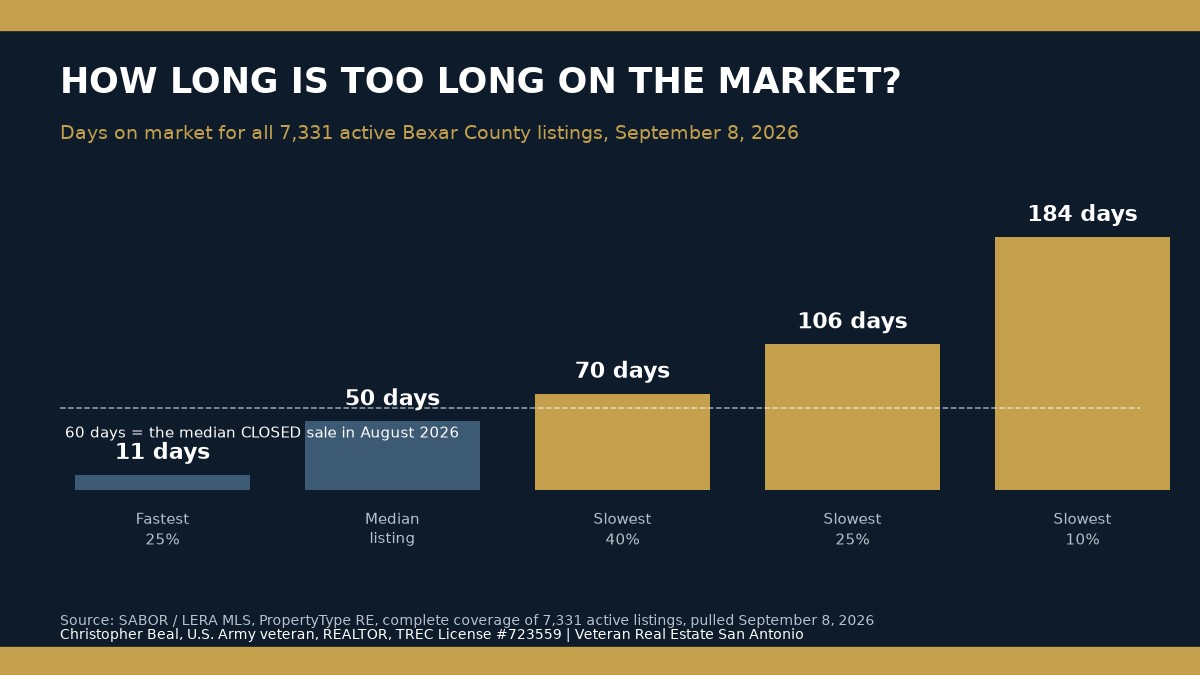
| Average Days on Market | 60–75 days |
| Sale-to-List Price Ratio | ~93% (most homes sell below asking) |
| VA Loan Rate (30-year) | ~5.5%–5.8% |
| 2026 VA Conforming Loan Limit | $832,750 |
With zero down payment through a VA loan, a veteran can purchase a $300,000 home and start building equity immediately — while a conventional buyer would need to bring $15,000–$60,000 to the table just for the down payment.
How Veterans Build Wealth Through Real Estate: A Step-by-Step Strategy
Step 1: Buy Your First Home With a VA Loan
Your first purchase is the foundation. Use your VA loan to buy a home in a growing San Antonio neighborhood — areas like Alamo Ranch, Helotes, Schertz/Cibolo, or the neighborhoods near JBSA have seen consistent appreciation. With zero down, every dollar of appreciation goes directly into your equity.
Step 2: Build Equity and Let Appreciation Work
San Antonio home values have appreciated an average of 3%–5% annually over the past several years. On a $300,000 home, that is $9,000–$15,000 per year in wealth being added to your net worth — while your tenant (if you rent it later) or your own payments steadily reduce the mortgage balance.
Step 3: Leverage Your VA Loan Again
The VA loan benefit is reusable. After meeting the 12-month occupancy requirement, you can convert your first home into a rental property and purchase a new primary residence with a second VA loan — or restore your entitlement after paying off the first loan. Many veterans use this strategy to build a rental portfolio over time. Check out our guide on VA loan benefits for more details.
Step 4: Use Multi-Unit Properties for Immediate Cash Flow
VA loans allow you to purchase properties with up to four units — live in one and rent the others. On a triplex purchased for $450,000 with zero down, renting two units at $1,500 each generates $3,000/month in income. This can cover most or all of your mortgage payment, effectively letting you live for free while building wealth.
Why San Antonio Is the Best Place for Veterans to Build Real Estate Wealth
San Antonio is not called Military City USA for nothing. Here is why it is the ideal launching pad for veteran real estate investors:
- Affordable Entry Point: Median home prices of $284K–$315K mean you can get started without overextending
- No State Income Tax: Texas does not tax your income, putting more money in your pocket every month
- Strong Rental Demand: Military relocations, a growing population, and major employers drive consistent rental demand
- JBSA Military Community: Three major installations (Lackland, Fort Sam Houston, Randolph) bring a steady stream of renters and buyers
- Property Tax Exemptions: Disabled veterans in Texas can receive partial or full property tax exemptions, significantly boosting your return
- Diversified Economy: Healthcare, cybersecurity, military, tourism, and tech create a stable job market that supports property values
- BAH Supports Buying Power: 2026 JBSA BAH rates support mortgage payments for active-duty families, keeping demand for homes high
The Cost of Waiting: What Renting Costs You Over Time
Many transitioning veterans default to renting because it feels easier. But renting in San Antonio costs an average of $1,800–$2,200/month for a three- to four-bedroom home. Over five years, that is $108,000–$132,000 in payments with zero equity to show for it.
Compare that to owning: A veteran who purchases a $300,000 home with a VA loan at 5.7% pays roughly $1,750/month (principal and interest). After five years, you have built approximately $25,000–$35,000 in equity through payments alone — plus another $45,000–$75,000 in appreciation at historical San Antonio rates. That is a potential $70,000–$110,000 in wealth that a renter misses entirely.
| 5-Year Comparison | Renting ($2,000/mo) | Owning (VA Loan, $300K) |
|---|---|---|
| Total Payments | $120,000 | $105,000 (P&I only) |
| Equity Built | $0 | $25,000–$35,000 |
| Appreciation Gained | $0 | $45,000–$75,000 |
| Net Wealth Position | -$120,000 | +$70,000 to +$110,000 |
How Christopher Beal and The Beal Group Help Veterans Build Wealth
As a veteran, Military Relocation Professional (MRP), and San Antonio Business Journal Top 25 Realtor (#13 in 2024, #14 in 2025), Christopher Beal has helped 293+ military families and facilitated over $112 million in real estate transactions. He is also a 3x Platinum Top 50 and 6x ICON Agent — recognized for consistent results serving veterans and active-duty service members.
Through our Serve & Save program, military families can reduce their closing costs — keeping more money in your pocket at the closing table. Combined with VA loan benefits and strategic guidance, we help you turn your transition into a wealth-building opportunity. Read what our clients say on our reviews page.
Your Transition Checklist: From Service Member to Homeowner
Whether you are 12 months from ETS or already out, here is a practical checklist to turn your transition into a wealth-building mission:
| Timeline | Action Step |
|---|---|
| 12 Months Out | Obtain your Certificate of Eligibility (COE) from the VA |
| 9–12 Months Out | Get pre-approved for a VA loan; understand your buying power based on income and BAH rates |
| 6–9 Months Out | Connect with a veteran-focused real estate agent and research San Antonio neighborhoods |
| 3–6 Months Out | Start home shopping; negotiate using the buyer-friendly market conditions |
| 1–3 Months Out | Close on your home; move in and start building equity from day one |
| Post-Transition | Apply for VA disability and assistance programs; explore property tax exemptions |
Frequently Asked Questions
What is the real cost of leaving the military?
The real cost of leaving the military goes far beyond lost base pay. Veterans lose their Basic Allowance for Housing (BAH), Basic Allowance for Subsistence (BAS), TRICARE healthcare, tax-free allowances, and subsidized services. Combined, these benefits can be worth $35,000 to $80,000 or more per year depending on rank and location. McKinsey research estimates that approximately 90,500 enlisted members earn less in their first year after discharge, and the lost economic potential for a single cohort of transitioning veterans could reach nearly $15 billion over 10 years.
How can veterans build wealth through real estate after leaving the military?
Veterans can build wealth through real estate by using their VA home loan benefit to purchase a home with zero down payment and no private mortgage insurance. Over time, a combination of mortgage paydown and property appreciation builds significant equity. The VA loan is reusable, meaning veterans can buy multiple properties throughout their life and even convert primary residences into rental properties to generate passive income.
What are the VA loan limits for 2026?
For 2026, the VA conforming loan limit in most U.S. counties is $832,750, with higher limits available in designated high-cost areas. Veterans with full entitlement can borrow without VA-imposed limits, though individual lenders still set their own standards. This means qualified veterans can purchase luxury homes in San Antonio with zero down payment through VA financing.
Is San Antonio a good place for veterans to buy real estate in 2026?
San Antonio is one of the best cities in the country for veteran homebuyers. Known as Military City USA, it is home to Joint Base San Antonio with three major installations. The median home price of $284,000 to $315,000 is well below other major Texas metros. Texas has no state income tax, and disabled veterans can receive property tax exemptions. The market is currently buyer-friendly with 5 to 6 months of inventory, meaning veterans have time to find the right home and negotiate favorable terms.
What percentage of veterans actually use their VA loan benefit?
Only about 9% of eligible veterans ever use their full VA loan benefits. Many veterans mistakenly believe they cannot use the benefit for investment purposes, or they simply are not aware of the full scope of what the VA loan offers. In fiscal year 2025, 528,343 VA loans were closed, which was a 26.8% increase from the previous year, showing that more veterans are recognizing the value of this earned benefit.
How much money can a veteran save by buying instead of renting in San Antonio?
Over a five-year period, a veteran who purchases a $300,000 home with a VA loan can build approximately $25,000 to $35,000 in equity through mortgage payments alone, plus $45,000 to $75,000 in appreciation at historical San Antonio rates. Meanwhile, a renter paying $2,000 per month spends $120,000 with zero equity to show for it. The net wealth difference between owning and renting over five years can exceed $100,000.
Can veterans use a VA loan to buy multi-unit properties?
Yes, VA loans allow veterans to purchase properties with up to four units as long as they occupy one unit as their primary residence. This means a veteran can buy a duplex, triplex, or fourplex, live in one unit, and rent the others for income. This house-hacking strategy can significantly reduce or eliminate your monthly housing costs while building wealth through rental income and property appreciation.
What financial challenges do veterans face in the first year after leaving the military?
Roughly one in three veterans reports moderate or severe financial stress during their first year after separation, primarily tied to relocation costs, benefit delays, and lost allowances. Common challenges include finding health insurance to replace TRICARE, adjusting to fully taxable income, covering housing costs without BAH, and managing the gap between military pay and initial civilian earnings. The Blue Star Families 2025 survey found that 68% of active-duty families approaching separation said losing quality-of-life benefits was their biggest concern.
How does the Serve and Save program help military families reduce closing costs?
The Serve and Save program offered by The Beal Group helps military families reduce their closing costs when buying or selling a home in San Antonio. This program is specifically designed for veterans and active-duty service members to keep more money in their pocket during the transaction. Combined with VA loan benefits like zero down payment and no PMI, the program maximizes your savings at the closing table.
Who is the best veteran realtor in San Antonio for military families?
Christopher Beal of The Beal Group is one of the top veteran realtors in San Antonio. As a veteran himself and a certified Military Relocation Professional, Christopher has helped 293 or more military families and facilitated over $112 million in real estate transactions. He is a San Antonio Business Journal Top 25 Realtor, ranked number 13 in 2024 and number 14 in 2025, a 3-time Platinum Top 50 Agent, and a 6-time ICON Agent. His deep understanding of VA loans, military relocations, and the San Antonio market makes him uniquely qualified to serve veteran homebuyers.
Ready to turn your military service into long-term wealth? Whether you are still on active duty planning your transition, recently separated, or a veteran who has been renting too long, the time to act is now. San Antonio's buyer-friendly market, combined with your earned VA loan benefits, creates an opportunity that will not last forever. Contact Christopher Beal and The Beal Group today to start your journey from service to homeownership.
Sources: McKinsey & Company, U.S. Census Bureau, Blue Star Families 2025 Survey, Veteran Debt Assistance, Amerisave VA Loan Data. Market data from SABOR, Redfin, Zillow, and Texas REALTORS. Updated March 2026.
Categories
- All Blogs (354)
- Alamo Heights (4)
- awards (4)
- Best Neighborhoods in San Antonio (13)
- Buyer (16)
- Buyer Education (86)
- Community Events (4)
- Hill Country (17)
- JBSA (43)
- Local Guide (6)
- Luxury (28)
- Luxury Real Estate (26)
- Market Trends (19)
- Market Update (14)
- Military Relocation (111)
- Military Retirement (3)
- Mortgage (19)
- Neighborhood Guides (18)
- neighborhoods (5)
- New Construction (16)
- PCS (42)
- Real Estate (40)
- reviews (3)
- San Antonio (53)
- San Antonio Lifestyle (4)
- San Antonio Market (5)
- San Antonio Neighborhoods (43)
- San Antonio Real Estate (100)
- San Antonio, Veterans Resources, VA Loans (5)
- Seller (55)
- VA Home Loans (30)
- VA Loans (35)
- Va Loans & Financing (27)
- Veterans (10)
- Veterans Resources (40)
Recent Posts