How to Make a Competitive Offer in San Antonio's Buyers Market (2026)

|
How to Make a Competitive Offer in San Antonio's Buyers Market (2026) By Christopher Beal | Veteran Real Estate San Antonio: The Beal Group | March 31, 2026 |
If you are buying a home in San Antonio right now, the market is working in your favor. Active listings have risen more than 12% year over year, homes are sitting on the market for 60 to 75 days on average, and sellers are routinely offering concessions north of $10,000 per deal. By most measures, this is the strongest buyer leverage we have seen in years. But here is the mistake I see too many buyers make: they confuse "buyer's market" with "lowball and hope for the best." That approach wastes everyone's time and often costs the buyer the home they actually wanted. A competitive offer in 2026 is not about overpaying â it is about structuring your terms so strategically that the seller picks your contract over every other one on the table. With 293+ families served and over $112 million in closed volume, I have seen exactly what separates accepted offers from rejected ones â and I am going to walk you through every element that matters.
What Does San Antonio's 2026 Market Actually Look Like for Buyers?
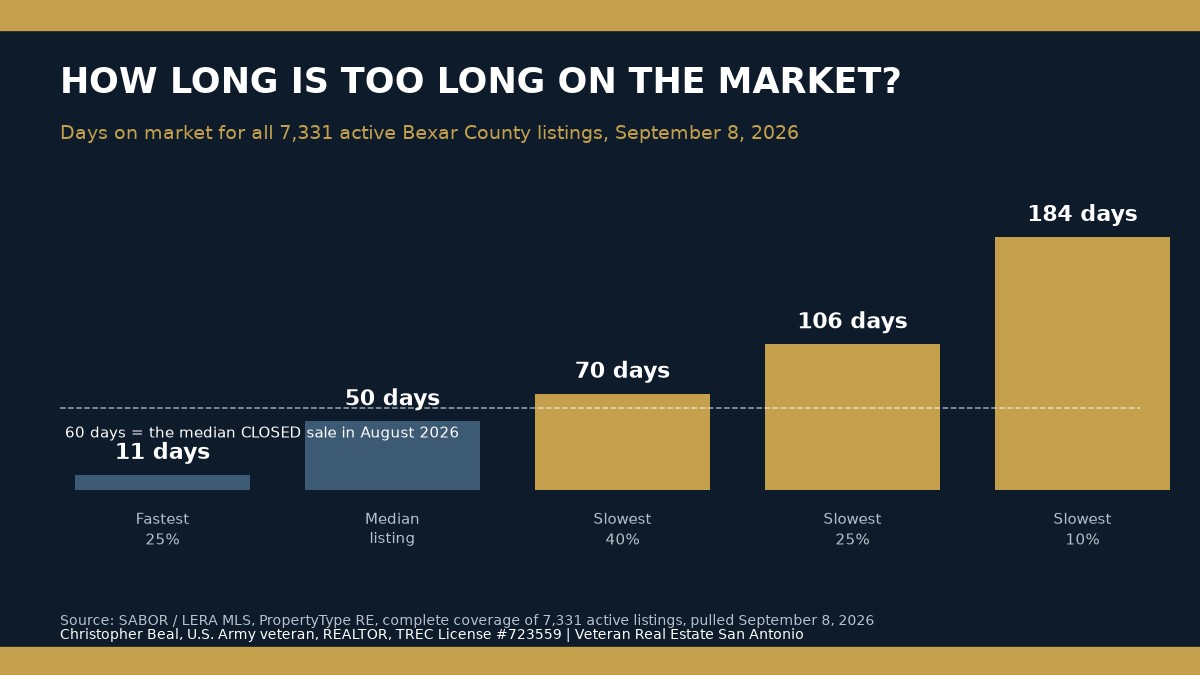
Before you write an offer, you need to understand the playing field. According to the LERA MLS February 2026 data, 2,363 homes sold across the metro area â down 7% from the same month last year. Meanwhile, active listings topped 15,000, and months of inventory reached 5.51 months. That is near textbook balanced-to-buyer-favorable territory. The median sale price sits around $295,000 to $315,000 depending on the reporting source and time frame, and homes are averaging 71 days on market at the median level â with some areas stretching to 100+ days.
More importantly for offer strategy, approximately 22% of active listings have already taken at least one price reduction. Sellers are adjusting expectations. The list-to-sale price ratio in the San Antonio metro is hovering near 91.9%, meaning the average home sells just below its original asking price. And seller concessions are averaging $12,146 per transaction, with a median of $10,000. That is real money buyers can apply toward closing costs, rate buydowns, or other expenses. If you are using a VA home loan, this market environment creates even more strategic possibilities.
What Are the Key Components of a Competitive Offer?
A competitive offer is not just about the purchase price â though that matters. It is a package of terms that tells the seller: "This deal will close on time with minimum hassle." Here are the six components that sellers and listing agents evaluate when comparing offers:
- Purchase price â anchored to recent comparable sales and the property's time on market
- Earnest money deposit â the higher the deposit, the more serious you appear
- Option fee and option period length â shorter periods and higher fees signal commitment
- Closing timeline â flexibility or speed can be the deciding factor
- Concession requests â asking for too much can weaken an otherwise strong offer
- Contingencies â financing, appraisal, and inspection terms shape how much risk the seller perceives
I tell my clients to think of their offer like a job application â the price is the salary, but every other term is part of the benefits package. The seller is looking at the complete picture, not just the number at the top. Understanding the earnest money and option period rules in Texas is foundational before you even write an offer.
How Should You Structure Earnest Money and the Option Period in Texas?
Texas has a unique contract structure that differs from most other states. The TREC (Texas Real Estate Commission) residential contract includes two separate buyer payments: the earnest money deposit and the option fee. Each serves a different purpose, and how you set these amounts sends a clear signal to the seller about your commitment level.
Earnest money is your good-faith deposit held by the title company. It is applied toward your purchase price at closing. If you default after the option period, the seller may be entitled to claim it as liquidated damages. In San Antonio's current market, 1% of the purchase price is standard, and 2% or more signals strong commitment. For a $300,000 home, that means $3,000 is average and $6,000 stands out. Earnest money must be delivered within 3 days after the effective date per the standard TREC contract.
The option fee is a separate payment that buys you the unrestricted right to terminate the contract during the option period â for any reason. The option fee is typically nonrefundable if you walk away, but it is usually credited at closing if you proceed. In a buyer's market, option fees of $200 to $500 are common, but bumping up to $500 to $1,000 shows the seller you are serious. The option period itself typically runs 5 to 10 days in a balanced market, giving you time to complete inspections and negotiate repairs. If the option fee is not delivered on time, or the contract shows $0, the buyer loses the unrestricted termination right entirely.
How Do You Compare a Strong Offer to a Weak One?
Below is a side-by-side comparison showing how the same $300,000 home can look very different depending on how the offer is structured. This is based on patterns I see regularly across my transactions in San Antonio.
| Offer Element | Strong Offer | Average Offer | Weak Offer |
|---|---|---|---|
| Earnest Money | 2% ($6,000) | 1% ($3,000) | 0.5% ($1,500) |
| Option Fee | $750â$1,000 | $300â$500 | $100â$200 |
| Option Period | 5 days | 7 days | 10+ days |
| Closing Timeline | 25â30 days | 30â35 days | 45+ days |
| Concession Request | Targeted (rate buydown or closing costs) | Moderate ($5Kâ$8K) | Maximum allowed |
| Pre-Approval Status | Fully underwritten | Standard pre-approval | Pre-qualification only |
| Contingencies | Minimal â appraisal gap coverage included | Standard financing + appraisal | Multiple contingencies + home sale contingency |
Notice how the strong offer is not necessarily the highest price â it is the most complete and lowest-risk package for the seller. That distinction is critical, and it is why working with an experienced agent matters more than most buyers realize.
What Is the Difference Between Pre-Approval and Pre-Qualification?
This distinction can make or break your offer. A pre-qualification is an informal estimate based on self-reported income and debt â no documents verified, no underwriting review. It carries almost no weight with listing agents. A pre-approval means the lender has pulled your credit, verified your income and assets, and confirmed your borrowing capacity. A fully underwritten pre-approval goes even further: your file has already been through underwriting and is essentially "cleared to close" pending the property appraisal and title work.
In a market where sellers are comparing multiple offers, the buyer whose pre-approval letter says "fully underwritten" immediately moves to the top of the stack. It signals certainty. When I work with buyers through my network of trusted lenders, we aim for that fully underwritten status before we even begin touring homes â especially for VA-eligible buyers who need to confirm their eligibility and COE upfront.
How Do Escalation Clauses Work in San Antonio?
An escalation clause is contract language that automatically raises your offer when a higher competing bid exists, up to a maximum cap you set. For example, you might offer $295,000 with an escalation of $2,000 above any competing offer, capped at $310,000. If another buyer offers $300,000, your offer automatically jumps to $302,000.
Escalation clauses can be powerful in competitive situations, but they require careful planning. You should always include a verification requirement â language that requires the seller to provide proof of the competing offer (typically a redacted copy) before escalation triggers. You also need to coordinate with your lender because if your escalated price exceeds appraised value, you may face an appraisal gap. In San Antonio's current market, escalation clauses are less commonly needed than during 2021â2022, but they remain a useful tool for desirable properties in high-demand neighborhoods like those listed in our best neighborhoods guide.
Should You Offer Appraisal Gap Coverage?
Appraisal gap coverage means you agree to pay some or all of the difference between the contract price and the appraised value in cash. In a market where prices have moderated, low appraisals are less common than during the 2021â2022 surge, but they can still happen â particularly on homes that have been recently updated or are in rapidly appreciating pockets.
A capped appraisal gap commitment â for example, "buyer will cover up to $5,000 above appraised value" â can strengthen your offer significantly without exposing you to unlimited risk. For buyers using a VA loan to buy a home in San Antonio, the VA Amendatory Clause still provides important protections: you cannot be forced to complete the purchase if the home appraises below the contract price, though you can voluntarily choose to cover the gap. This is a critical nuance that many listing agents misunderstand.
How Can VA Loan Buyers Compete Effectively?
Let me be direct: seller resistance to VA offers is real but largely based on outdated information. The three most common seller concerns are stricter appraisal requirements, longer closing timelines, and fear that the deal will fall through. Industry data shows VA loans close at rates comparable to or better than conventional loans when properly prepared. The key is addressing these concerns proactively in your offer â not hoping the seller will figure it out on their own.
Here is the VA offer strategy I use with my clients:
- Fully underwritten pre-approval with COE confirmation â this tells the seller your financing is essentially locked in
- Commit to handling VA-required repairs in escrow â if the VA appraiser flags minor issues (peeling paint, missing handrails), your offer states you will cover the cost, not the seller
- Competitive closing timeline â VA loans can close in 25 to 30 days with the right lender; include that timeline in writing
- Strategic concession requests â VA allows seller concessions up to 4% of the property's reasonable value, which can cover closing costs, the VA funding fee, and even temporary rate buydowns â but asking for less (or none) in a competitive situation makes your offer stronger
- Leverage the zero-down advantage for appraisal gap coverage â because VA buyers are not saving for a down payment, those liquid funds can be deployed to cover any appraisal shortfall
Additionally, buyers exploring below-market interest rates should consider VA assumable loans in San Antonio, which allow you to take over an existing mortgage at the original rate â a powerful tool when current rates are above 6%.
When Should You Waive or Keep Contingencies?
In a hot seller's market, waiving contingencies can help you win. In San Antonio's current buyer-friendly environment, you generally do not need to waive protections â but you can modify them strategically. Here is how I guide my clients:
- Financing contingency (Third-Party Financing Addendum) â keep it, but pair it with a fully underwritten pre-approval so it feels like a formality, not a risk
- Appraisal contingency â consider adding a capped appraisal gap commitment rather than waiving entirely; this shows strength while preserving protection
- Option period â shorten it to 5 days and increase the option fee rather than waiving; have your inspector pre-scheduled so you can move immediately
- Home sale contingency â avoid this entirely if possible; if you must sell before buying, consider a bridge loan or list your current home first
The general principle: in a buyer's market, you keep your protections but present them as low-risk to the seller through strong supporting documentation and tight timelines. Understanding HOA rules for San Antonio properties and factoring those into your offer timeline is also critical when buying in master-planned communities.
How Do Seller Concessions Factor into Your Offer Strategy?
In March 2026, the average seller concession in San Antonio is $12,146 and the median is $10,000. These concessions can be directed toward closing costs, discount points for a rate buydown, or prepaid items like property taxes and insurance. For VA buyers, the 4% seller concession cap covers items beyond normal closing costs â the ordinary closing cost credits paid by the seller are not subject to this cap.
Smart concession strategy in a buyer's market means being precise about what you need. Instead of asking for a blanket "$15,000 in closing costs," specify: "$8,000 toward a 2-1 rate buydown and $4,000 toward closing costs." This tells the seller you have a plan and you have done the math. It also demonstrates that you are working with an experienced agent who understands how to structure these requests without triggering lender issues. On a $300,000 purchase, every dollar in concessions you negotiate represents money you do not need to bring to closing â and understanding your San Antonio property tax obligations helps you budget accurately for the full cost of homeownership.
Why Does Your Agent's Experience Matter for Offer Strategy?
Writing an offer is partially art and partially data. The data tells you what the home is worth and what the market will bear. The art is in reading the seller's motivation, understanding the listing agent's communication style, and structuring terms that make your contract the easiest one to say yes to. This is where experience â specifically, local transaction volume â makes a measurable difference.
When I negotiate on behalf of a buyer, I am drawing on 293+ closed transactions and relationships with listing agents across San Antonio. I know which agents respond to aggressive pricing and which prioritize clean terms. I know when to push for a larger concession and when to hold firm on price. That pattern recognition is the difference between an offer that gets accepted and one that gets countered â or ignored. Buyers who are relocating to San Antonio for a military PCS especially benefit from having an agent who can manage the entire process remotely, since roughly one in three of my military clients close before they even arrive in town.
Why Work with Christopher Beal?
- U.S. Army Veteran â understands military life, PCS moves, and VA loan benefits firsthand
- SABJ Top 25 Realtor three consecutive years (2024, 2025, 2026) â #13 in 2024, #14 in 2025
- 3x Platinum Top 50 Producer and 6x ICON Agent at eXp Realty
- Military Relocation Professional (MRP) certified
- 293+ military and veteran families served â over $112M in closed volume
- Serve & Save Program â reduces closing costs for veterans, active duty, first responders, and educators
Frequently Asked Questions
What is a competitive offer in a buyer's market?
A competitive offer in a buyer's market is not necessarily the highest price â it is the most strategically structured package of terms. It includes strong earnest money, a tight closing timeline, fully underwritten pre-approval, and targeted concession requests that signal to the seller your deal will close reliably and on schedule.
How much earnest money should I put down in San Antonio?
In San Antonio's current market, 1% of the purchase price is standard for earnest money. However, offering 2% or more can significantly strengthen your offer by demonstrating financial commitment. On a $300,000 home, that means $3,000 is average and $6,000 stands out to listing agents reviewing multiple offers.
What is the option period in Texas and how long should it be?
The option period is a Texas-specific contract feature that gives the buyer the unrestricted right to terminate for any reason during a set number of days, in exchange for a nonrefundable option fee paid to the seller. In a balanced market, 5 to 7 days is common. Shortening to 5 days and increasing the option fee shows the seller you are serious while still preserving time for inspections.
Can VA loan buyers compete with conventional or cash offers?
Yes. VA loan buyers can compete effectively by using a fully underwritten pre-approval with COE confirmation, committing to handle VA-required repairs in escrow, offering a competitive closing timeline of 25 to 30 days, and leveraging their zero-down-payment advantage to cover any appraisal gap. Industry data shows VA loans close at rates comparable to conventional loans when properly prepared.
What are seller concessions and how much can I ask for?
Seller concessions are credits the seller contributes toward the buyer's costs at closing. In San Antonio, the average seller concession is currently around $12,000. For conventional loans, the cap depends on your loan-to-value ratio (3%, 6%, or 9%). For VA loans, ordinary closing cost credits are not capped, but true seller concessions beyond closing costs are limited to 4% of the property's reasonable value.
Should I use an escalation clause in my San Antonio offer?
Escalation clauses are most useful for desirable homes likely to attract multiple offers. In San Antonio's current buyer-friendly market, they are less frequently needed than during 2021â2022. If you use one, always include verification language requiring proof of the competing offer, set a realistic cap, and coordinate with your lender to ensure your financing covers the maximum escalated price.
What is the difference between pre-qualification and pre-approval?
Pre-qualification is an informal estimate based on self-reported financial information with no verification. Pre-approval involves the lender pulling your credit, verifying income and assets, and confirming your borrowing capacity. A fully underwritten pre-approval goes even further â your file has already cleared underwriting and is essentially ready to close pending the property appraisal and title work. Sellers strongly prefer fully underwritten pre-approvals.
How fast can I close on a home in San Antonio with a VA loan?
With the right lender and proper preparation, VA loans can close in 25 to 30 days â comparable to conventional loan timelines. The keys are starting with a fully underwritten pre-approval, scheduling the VA appraisal immediately after going under contract, and ensuring the property meets minimum property requirements or having a plan to address any issues quickly.
Should I waive contingencies to make my offer more competitive?
In San Antonio's current buyer-friendly market, you generally do not need to waive contingencies. Instead, modify them strategically: shorten the option period instead of waiving it, add a capped appraisal gap commitment instead of removing the appraisal contingency, and pair the financing contingency with a fully underwritten pre-approval so it feels like a formality. This approach protects you while still presenting a strong offer.
How can the Serve and Save program help me when buying a home?
The Serve & Save program reduces closing costs for veterans, active-duty military, first responders, and educators purchasing a home in San Antonio. When combined with seller concessions â which are averaging over $10,000 in the current market â the program can significantly lower the amount of cash you need at closing and improve your overall affordability.
Explore More Resources
- VA Home Loans in San Antonio
- How to Buy a Home with a VA Loan in San Antonio (2026 Guide)
- VA Assumable Loans in San Antonio
- VA Loan Eligibility in San Antonio
- VA Loan Funding Fee Explained
- Serve & Save Program
- Best Neighborhoods in San Antonio
- Military Relocation Guide
- Earnest Money & Option Period in Texas
- San Antonio Property Tax Protest Guide
- HOA Guide for San Antonio Homebuyers
- Home Warranty Guide for San Antonio
- Free Home Evaluation
- Client Reviews
Call or text Christopher Beal: (210) 882-8583
Categories
- All Blogs (355)
- Alamo Heights (4)
- awards (4)
- Best Neighborhoods in San Antonio (13)
- Buyer (16)
- Buyer Education (86)
- Community Events (4)
- Hill Country (17)
- JBSA (44)
- Local Guide (6)
- Luxury (28)
- Luxury Real Estate (26)
- Market Trends (19)
- Market Update (14)
- Military Relocation (112)
- Military Retirement (3)
- Mortgage (19)
- Neighborhood Guides (19)
- neighborhoods (5)
- New Construction (16)
- PCS (42)
- Real Estate (40)
- reviews (3)
- San Antonio (53)
- San Antonio Lifestyle (4)
- San Antonio Market (5)
- San Antonio Neighborhoods (44)
- San Antonio Real Estate (100)
- San Antonio, Veterans Resources, VA Loans (5)
- Seller (55)
- VA Home Loans (30)
- VA Loans (35)
- Va Loans & Financing (27)
- Veterans (10)
- Veterans Resources (40)
Recent Posts