How Airplane Routes & Noise Affect Home Prices in San Antonio
| How Airplane Routes & Noise Affect Home Prices in San Antonio By Christopher Beal — Army Veteran, SABJ Top 25 Realtor (#13 in 2024, #14 in 2025), Military Relocation Professional Updated March 2026 | 293+ Families Served | $112M+ in Sales | 3x Platinum Top 50 | 6x ICON Agent |
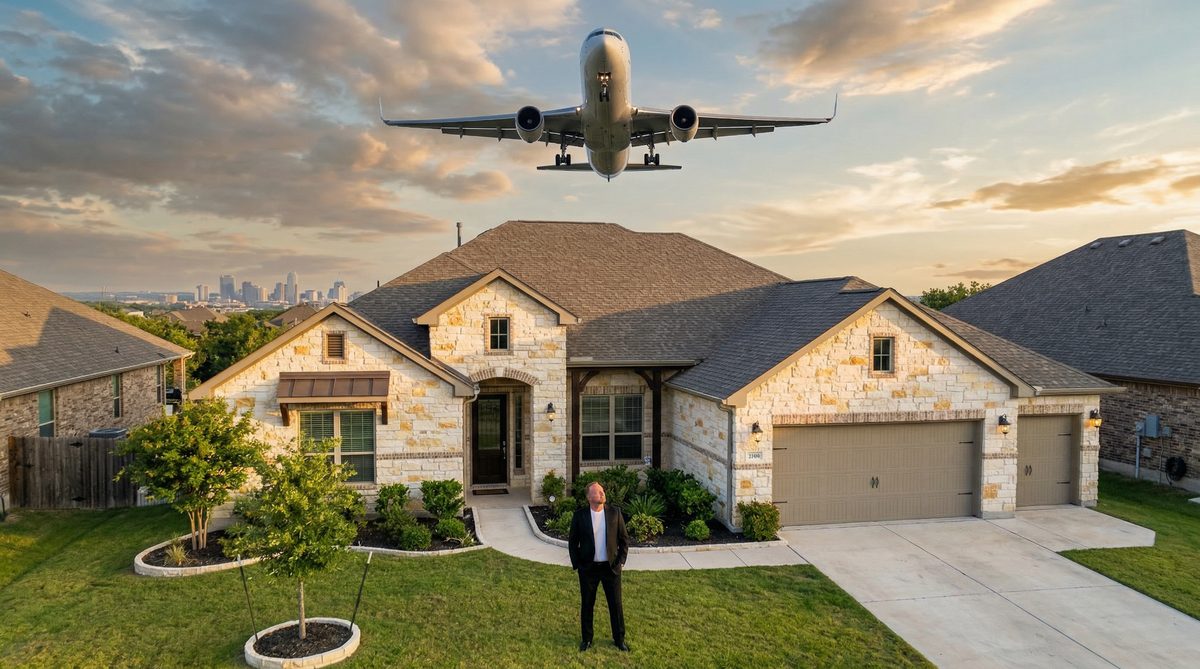
San Antonio is known as "Military City USA" for good reason. It is home to Joint Base San Antonio (JBSA) — the largest joint military installation in the Department of Defense — which encompasses Lackland AFB, Randolph AFB, Fort Sam Houston, and Camp Bullis. Add San Antonio International Airport (SAT) with its growing commercial operations, and the San Antonio metro has one of the most complex airspace environments of any major U.S. city. For homebuyers, sellers, and investors, that airspace has a direct, measurable impact on property values.
I'm Christopher Beal, a U.S. Army veteran and SABJ Top 25 REALTOR (#13 in 2024, #14 in 2025) with eXp Realty. I hold the Military Relocation Professional (MRP) certification and have helped 293+ military families buy and sell homes across the San Antonio metro — more than $112 million in career volume. Airplane noise shapes which neighborhoods buyers consider, how fast homes sell, what they appraise for, and whether rental demand holds up. This is one of the most under-discussed factors in San Antonio real estate.
This guide covers what aircraft noise means in San Antonio, the peer-reviewed research on price impact, neighborhood noise zones, the T-7A Red Hawk transition at JBSA-Randolph, FAA Performance-Based Navigation (PBN) changes, buyer-type impacts, and the quietest communities in the metro. Whether you are on PCS orders to JBSA, relocating from out of state, planning a home sale, or evaluating an investment, this guide will help you make a confident decision.
Get Your Free San Antonio Home & Noise Analysis →
| What Counts as Aircraft Noise in San Antonio? |
Before we get into the data, it helps to understand the three distinct sources of aircraft noise that affect San Antonio neighborhoods. Unlike most cities that only deal with commercial airport traffic, San Antonio has a layered airspace shared by civilian and military operations.
1. San Antonio International Airport (SAT) — Commercial Operations
SAT airport serves more than 10 million passengers annually. Flight paths extend primarily north and south along the Highway 281 corridor, affecting central and north-central neighborhoods. Community feedback identifies Shavano Park, Churchill Estates, Deerfield, Lockhill Selma, and portions of Stone Oak as areas with regular commercial jet overflights. The noise profile is predictable — concentrated during peak travel hours (6 AM–10 PM) with reduced operations overnight.
2. JBSA-Lackland AFB — Military Training & Cargo
JBSA-Lackland includes Kelly Field, which historically hosted C-5 Galaxy cargo operations and continues to support military cargo and training flights. The noise primarily affects Medina Base Road, Westover Hills, and the SeaWorld area. Military operations are less predictable than commercial flights — training schedules shift and cargo operations can occur at off-peak hours. If you are looking at homes in west San Antonio near JBSA, evaluate Lackland's operations in person.
3. JBSA-Randolph AFB — Pilot Training Operations
JBSA-Randolph is the primary installation for undergraduate pilot training, generating consistent noise over Converse, Schertz, Selma, and Universal City. The critical detail most buyers miss: training flights are overwhelmingly Monday through Friday, 9 AM to 5 PM. Evenings and weekends are typically quiet. The City of Schertz has installed eight noise awareness signs throughout the city. Properties in the Air Installation Compatible Use Zone (AICUZ) carry specific disclosure requirements.
Understanding these three sources — and when each one is active — is the foundation for every pricing, negotiation, and location decision we will discuss in this guide. Let's look at what the research says about the financial impact.
| The Data: How Much Does Airplane Noise Reduce Home Values? |
The most rigorous study on this topic is NBER Working Paper #34431 (2025), "Planes Overhead: How Airplane Noise Impacts Home Values." The study used quasi-experimental variation from the FAA's PBN rollout, combining high-resolution flight trajectory data with geocoded housing transactions. Key findings:
- A 1-decibel increase in annual day-night average sound level (DNL) reduces home prices by 0.6% to 1.0%
- For every 1% increase in airplane noise exposure, homes sold for 0.2% to 0.3% less
- If ambient background noise is below 40 dB, there is minimal to no measurable impact on prices
- The impact increases as decibels exceed 40 dB, with 60+ dB zones experiencing the greatest price reductions
- "Aircraft noise remains a significant disamenity for households, even in urban areas with long-standing exposure"
- Willingness to pay for quieter conditions varies with income — higher-income buyers show greater sensitivity to noise, which has distributional consequences
Translated to San Antonio: a home in a 65 dB zone near JBSA-Lackland or under a primary SAT route could lose roughly 9–25% compared to an equivalent home in Helotes or Fair Oaks Ranch. In practice, my San Antonio transaction data shows a 5–20% reduction, aligning with the NBER findings. Additional research from Science Direct confirms that noise complaints significantly depress home prices, and that official noise contours often underestimate actual exposure per GAO and EPA reports.
| Noise Factor | Measured Impact on Home Value | Source |
|---|---|---|
| Per 1 dB increase (DNL) | –0.6% to –1.0% | NBER #34431 (2025) |
| Per 1% increase in noise exposure | –0.2% to –0.3% | NBER #34431 (2025) |
| High-noise zone (65+ dB DNL) | –10% to –20% | San Antonio market data |
| Moderate-noise zone (55–64 dB) | –2% to –8% | San Antonio market data |
| Below 40 dB (ambient quiet) | Minimal to no impact | NBER #34431 (2025) |
| Extended days on market (high noise) | +20% to +40% longer DOM | San Antonio market data |
| Noise complaints as price predictor | Significant adverse effect confirmed | Science Direct / GAO / EPA |
The takeaway for San Antonio buyers: noise is not just a lifestyle inconvenience. It is a quantifiable financial factor that affects your purchase price, your appraisal, your resale timeline, and your long-term equity. Let's map where these impacts fall across the metro.
| San Antonio's Aircraft Noise Zones: A Neighborhood-by-Neighborhood Breakdown |
Based on official DNL contour maps from San Antonio International Airport, JBSA AICUZ data, community feedback, and my direct transaction experience, I categorize San Antonio neighborhoods into three noise zones. Understanding which zone a property falls into is the single most important step before making an offer.
These neighborhoods experience frequent, loud overflights from commercial jets, military trainers, or cargo aircraft. Outdoor conversations are regularly interrupted. Windows rattle during peak operations. Sleep disruption is common without acoustical treatment.
- West San Antonio / JBSA-Lackland corridor: Medina Base Road, Westover Hills, SeaWorld area, Kelly Field vicinity
- Northeast San Antonio / JBSA-Randolph corridor: Converse, Schertz, Selma, Universal City
- Central SAT corridors: Portions of Alamo Heights and Terrell Hills directly under primary approach/departure paths
These areas experience noticeable but less frequent overflights. Noise is present but does not dominate daily life. Many residents adapt over time. Outdoor activities are occasionally disrupted. Impact on pricing is measurable but manageable.
- Stone Oak (east of Highway 281) — under secondary SAT approach paths
- Windcrest — proximity to Randolph flight patterns
- Northern I-35 corridor — intersection of SAT and Randolph airspace
- Leon Valley — western SAT departure routes
- Shavano Park / Churchill Estates / Deerfield — community feedback confirms regular jet noise
These communities sit outside all commercial and military flight corridors. Aircraft noise is not a factor in daily life, property values, or resale timelines. These are San Antonio's quietest neighborhoods.
- Helotes — Hill Country living, 20 min from downtown, zero flight paths
- Boerne — northwest corridor, top-rated Boerne ISD, no overhead traffic
- Fair Oaks Ranch — exclusive enclave between Boerne and San Antonio
- Mico / Pipe Creek — rural Hill Country west of Helotes
- Castroville — "The Little Alsace of Texas," west of Lackland but outside flight paths
- Master-planned communities in the far northwest corridor
| Zone | DNL Range | Price Impact | Key Neighborhoods | Noise Source |
|---|---|---|---|---|
| Red (High) | 65+ dB | –10% to –20% | Medina Base Rd, Westover Hills, Converse, Schertz, Selma | Lackland, Randolph, SAT |
| Yellow (Moderate) | 55–64 dB | –2% to –8% | Stone Oak (east), Windcrest, Leon Valley, Shavano Park | SAT, Randolph (secondary) |
| Green (Low/Zero) | Below 40 dB | None | Helotes, Boerne, Fair Oaks Ranch, Mico, Castroville | None |
| The T-7A Red Hawk Transition at JBSA-Randolph: What It Means for Homeowners |
The Air Force is transitioning from the T-38C Talon to the T-7A Red Hawk at JBSA-Randolph — and most homebuyers and sellers are unaware. This directly affects every property in the Randolph flight training area: Schertz, Converse, Selma, Universal City, and portions of Live Oak.
What We Know About the T-7A Transition
- Timeline: T-7A aircraft began arriving at Randolph around 2023. The T-38C is phasing out between 2024 and 2031. Full T-7A training operations are expected by approximately 2028.
- Environmental Impact Statement (EIS): Completed. The Air Force evaluated noise, air quality, and land-use compatibility for the new aircraft.
- Primary operations: JBSA-Randolph remains the primary training location, with secondary operations at JBSA-Lackland (Kelly Field).
- Air quality factor: Bexar County is designated as a marginal ozone nonattainment area, which may limit the total number of daily training sorties — a detail that could moderate noise levels relative to historical T-38C operations.
- Noise profile: The T-7A has a different acoustic signature than the T-38C. Final noise contour maps for full T-7A operations are still being developed as training ramps up.
What the Schertz Noise Signs Tell You
Schertz installed eight permanent noise awareness signs noting proximity to JBSA-Randolph flight training. When a city government posts permanent noise signage, the noise is real enough for public acknowledgment. For real estate purposes, this is a de facto disclosure — buyers who ignore it do so at their own risk.
For sellers in the Randolph corridor, transparency is critical. Disclosing the AICUZ designation and the T-7A transition upfront — and pricing accordingly — will produce a faster, cleaner sale than hoping a buyer does not discover the noise issue during due diligence. I cover specific seller strategies in the mitigation section below.
| SAT Airport Expansion & Performance-Based Navigation: How Flight Paths Are Changing |
The FAA's Performance-Based Navigation (PBN) rollout uses GPS to create more precise flight paths — with significant, unevenly distributed consequences for neighborhoods.
How PBN Changes Flight Corridors
Under traditional approaches, commercial jets followed corridors approximately 4 miles wide. Under PBN, those corridors narrow to approximately 1 mile wide. The result:
- Homes directly under the new narrow corridor: Significantly MORE concentrated noise — more planes, more often, on the exact same path overhead
- Homes on the edges of the old wide corridor: Significantly LESS noise — planes that used to fly over are now routed onto the narrow track
- Net effect: A redistribution of noise impact, with winners and losers determined by GPS coordinates
PBN-equipped aircraft are already using the new procedures at SAT. The updated 2026 Future Conditions DNL contour map is available from flysanantonio.com and should be reviewed by any buyer considering a home in the SAT approach or departure corridors.
The $135 Million Acoustical Treatment Program
The City of San Antonio has invested $135 million in acoustical treatment for 1,582 residences within the SAT noise zone — upgraded windows, insulation, and sound barriers. Permanent noise monitoring terminals track compliance around the airport.
For buyers, acoustical treatment is a double-edged signal: it reduces interior noise (genuinely beneficial) but confirms the property is in an official high-noise zone (reflected in appraisals). I always verify treatment status and records for every property in the SAT noise zone.
Learn How Serve & Save Reduces Your Closing Costs →
| How Noise Shapes Different Buyer Types in San Antonio |
Noise sensitivity varies dramatically by buyer type. Understanding where you fall on that spectrum is critical. Here is what I see across military relocation families, first-time buyers, luxury clients, remote professionals, and investors.
Remote Workers & Work-From-Home Professionals
For full-time remote workers, airplane noise is frequently a deal-breaker. Video calls and focused work suffer when jets pass overhead. Many remote workers relocating from California or other high-cost metros consistently prioritize green-zone communities like Helotes, Boerne, and Fair Oaks Ranch.
Families with Children
Families prioritize sleep quality, outdoor play, and neighborhood tranquility. Noise that disrupts nap times, bedtime routines, or backyard activities is a significant negative. School district quality often intersects with noise considerations — families want both top-rated schools and quiet streets. Communities served by Northside ISD, North East ISD, and Comal ISD in the green and yellow zones tend to attract the strongest family buyer demand.
Veterans & Active-Duty Military
Military buyers are the most noise-tolerant segment in San Antonio. Shorter commutes to JBSA installations save time and money, and many service members are accustomed to aircraft noise. This tolerance supports values in red-zone neighborhoods that would otherwise see steeper discounts. The 2026 JBSA BAH rates make homes near base particularly attractive.
Luxury Buyers ($500K+)
Noise is a top disqualifying factor for luxury buyers. At $500K+, the expectation is a premium experience — and aircraft noise destroys that regardless of how beautiful the home is. Luxury homes holding the strongest values are in green-zone communities: The Dominion, Anaqua Springs Ranch, Canyons at Scenic Loop, and Hill Country estates.
Real Estate Investors
Investors are the exception. Rental demand near JBSA stays strong because tenants prioritize proximity over noise. A property in Converse that sells at a 15% noise discount but rents at 95% of quiet-area rates creates a superior cap rate. I help investors model these scenarios with actual rental comparables.
| Buyer Type | Noise Sensitivity | Preferred Zone | Strategy |
|---|---|---|---|
| Remote Workers | Very High — deal-breaker | Green only | Helotes, Boerne, Fair Oaks Ranch |
| Families with Children | High — sleep & outdoor priority | Green or Yellow | Top school districts in quiet corridors |
| Veterans / Active Duty | Low — noise-tolerant | All zones | Prioritize commute time to JBSA |
| Luxury Buyers ($500K+) | Very High — disqualifying | Green only | The Dominion, Hill Country estates |
| Investors | Low — leverage noise discount | Red or Yellow | Near-base rentals, superior cap rates |
| Quantifying Resale Impacts: Appraisals, Days on Market & the Investor Exception |
Beyond purchase price, airplane noise creates three resale challenges that show up in every transaction I handle in noise-affected areas.
Lower Appraisals
Homes in high-noise zones appraise 5–20% below comparable quiet properties. This is critical for VA loan and first-time buyers financing with low or zero down. If the appraisal comes in low due to noise, you renegotiate, bring funds, or walk. I pull comparable sales within the same noise contour — not just the same zip code. A home in Windcrest under a flight path and a home on a quiet cul-de-sac are not the same comp.
Extended Days on Market
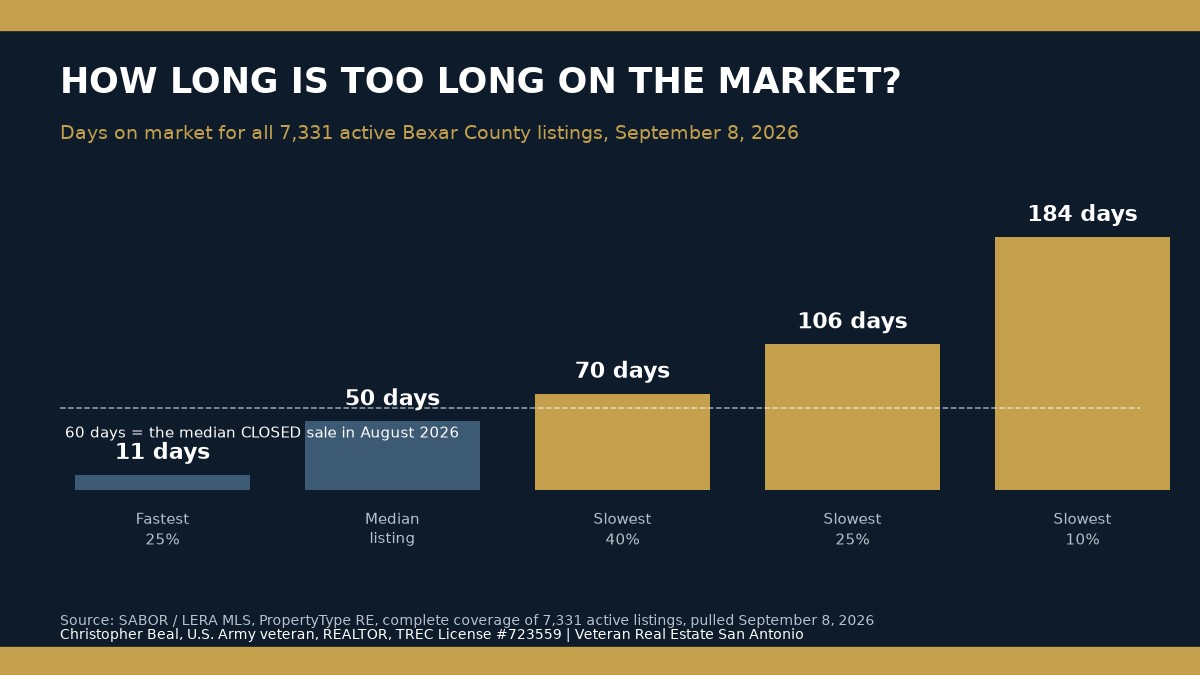
Noise-zone homes average 20–40% longer DOM. With San Antonio's 60–75 day average (per the spring 2026 forecast), that means 72–105 days in moderate zones and 84–120+ in high-noise zones. Every extra day costs money — and for PCS sellers on a military timeline, extended DOM can be devastating.
The Investor Exception
The exception: the investor rental market near JBSA. Rental demand from service members and DoD contractors keeps velocity high in Converse, Schertz, and Westover Hills. If your exit strategy is selling to another investor, the noise discount becomes a built-in advantage. I help investment-focused clients identify these opportunities throughout the JBSA corridor.
| Resale Factor | Quiet Neighborhood | Moderate Noise Zone | High Noise Zone |
|---|---|---|---|
| Appraisal vs. Comparable Quiet Home | Baseline | –2% to –8% | –10% to –20% |
| Average Days on Market | 60–75 days | 72–105 days | 84–120+ days |
| Rental Demand | Standard | Standard | Strong (near JBSA) |
| Buyer Pool Depth | All buyer types | Military, investors, tolerant families | Military & investors primarily |
| San Antonio's Quietest Communities: Where to Buy for Zero Aircraft Noise |
For buyers who need zero aircraft noise, these communities sit entirely outside commercial and military flight corridors. I have sold homes in all of these areas.
Helotes
Helotes offers Hill Country tranquility with a 20-minute commute to downtown. Completely outside all flight corridors, it has established neighborhoods and new construction ($300K–$1M+), Northside ISD schools, and several gated communities.
Boerne
Approximately 30 miles northwest along I-10, Boerne offers zero aircraft noise, top-rated Boerne ISD schools, and a charming downtown. Homes range from $300K to $2M+ for Hill Country acreage. Out-of-state buyers from California frequently choose Boerne. The San Antonio vs. Austin comparison often leads buyers here — Hill Country beauty at lower price points than Dripping Springs.
Fair Oaks Ranch
An incorporated city between Boerne and San Antonio, Fair Oaks Ranch is one of the luxury neighborhoods out-of-state buyers love. Large lots, a country club, its own police department, Boerne ISD schools, and zero aircraft noise. Homes: $400K–$1.5M+. For luxury buyers who want quiet above all else, this is a premier option.
Mico & Pipe Creek
For rural Hill Country acreage with absolute silence, Mico and Pipe Creek deliver. Located west of Helotes along Highway 16, these communities offer 1–20+ acre properties at some of the metro's most affordable prices. Commute times to downtown: 40–50 minutes, manageable for hybrid workers.
Castroville
"The Little Alsace of Texas" sits outside flight corridors despite its proximity to JBSA-Lackland. Alsatian heritage, affordable housing, and a 25-minute Lackland commute make Castroville an underrated option served by Medina Valley ISD.
Find Quiet Homes Near JBSA — Free Custom Search →
| Mitigation & Marketing Strategies for Sellers in Noise-Affected Areas |
If you own a home in a noise-affected zone and plan to sell, these strategies minimize the noise discount and attract the right buyers. The difference between a well-executed noise-zone listing and a poorly positioned one can be tens of thousands of dollars.
Physical Mitigation Improvements
- Acoustical windows: Double- or triple-pane windows with laminated glass can reduce interior noise by 25–50%. This is the single highest-ROI improvement for noise-affected homes.
- Upgraded insulation: Blown-in cellulose or spray foam insulation in attic spaces and exterior walls reduces sound transmission significantly.
- Solid-core doors: Replacing hollow-core exterior and interior doors with solid-core alternatives reduces noise bleed.
- Landscaping barriers: Dense tree lines, privacy fences, and earth berms create physical sound barriers. Mature live oaks and cedar elms common to San Antonio provide both noise reduction and shade.
- Interior layout: If possible, position bedrooms and home offices on the side of the home opposite the primary flight path. Orient outdoor living spaces (patios, pools) away from the overhead corridor.
Marketing & Pricing Strategies
- Price accurately from day one: The worst mistake sellers in noise zones make is pricing at "quiet neighborhood comps" and hoping for the best. This leads to extended DOM, multiple price reductions, and a final sale price that is often lower than if they had priced correctly at launch. Pull comparable sales within the same noise contour.
- Target military and investor buyers: Your marketing should explicitly highlight proximity to JBSA, commute times to base, BAH alignment, and rental income potential. These buyer segments are noise-tolerant and value-driven.
- Disclose proactively: Include the AICUZ designation, noise contour data, and any acoustical treatment records in your disclosure package. Buyers who discover noise issues during inspection — rather than learning about them upfront — are more likely to walk or demand excessive concessions.
- Schedule showings strategically: If your home is near Randolph (weekday training only), schedule open houses on weekends when the skies are quiet. For SAT-affected homes, late-morning or early-afternoon showings during off-peak flight hours can make a measurable difference in buyer perception.
- Highlight acoustical treatment: If your home has been treated under the $135 million SAT program, make this a selling point. "Acoustically treated with upgraded double-pane windows and insulation through the City of San Antonio noise compatibility program" is a positive feature, not a negative admission.
| How Christopher Beal Helps You Navigate Airplane Noise in San Antonio Real Estate |
Most agents will show you a home and never mention you are sitting beneath a primary departure route. I take a different approach.
Custom Noise Analysis for Every Property
For every home my clients consider in noise-affected or noise-adjacent areas, I provide a custom noise analysis that includes:
- Flight path mapping: Using FAA data and the 2026 DNL contour maps, I identify the exact flight corridors relative to the property
- AICUZ verification: I confirm whether the property falls within JBSA's Air Installation Compatible Use Zone and what that means for disclosure, insurance, and resale
- Historical noise complaint data: Where available, I pull complaint records to understand the actual resident experience — not just what the contour maps suggest
- Comparable sales within the noise zone: I generate comps from properties within the same noise contour to set realistic pricing expectations — critical for accurate VA appraisals and closing cost planning
- PBN impact assessment: I evaluate whether FAA Performance-Based Navigation changes are likely to increase or decrease noise at the specific property in the coming years
Strategic Pricing & Negotiation
For buyers, I use noise data to negotiate appropriate discounts. For sellers, I minimize the noise discount and target the buyer segments most likely to close. My track record of 293+ families served and $112M+ in career volume supports every recommendation with evidence.
The Serve & Save Program
My Serve & Save program reduces closing costs by 1% per year of service, up to 6%, stacking on your VA loan zero-down-payment benefit. On a $400,000 home near JBSA: up to $24,000 in reduced closing costs. On a $700,000 Hill Country home: up to $42,000.
Credentials That Matter
Credentials that back every recommendation:
- U.S. Army veteran — I understand military life, PCS timelines, and BAH budgeting
- Military Relocation Professional (MRP) certified
- SABJ Top 25 San Antonio Realtor — #13 in 2024, #14 in 2025
- 3x Platinum Top 50 — top 50 agents in the San Antonio metro
- 6x ICON Agent at eXp Realty — the company's highest production award
- Five Star Professional award recipient
- 293+ families served | $112M+ career volume
- Read what my clients say: Client Reviews
| Related Guides & Resources |
Internal Guides
- PCS Orders to JBSA — Complete Relocation Guide
- New Construction Near JBSA — Best Builder Communities
- Master-Planned Communities in San Antonio
- Best Gated Communities in Helotes, TX
- Best Gated Communities in San Antonio
- 7 Luxury Neighborhoods Out-of-State Buyers Love (2026)
- 2026 JBSA BAH Rates by Rank
- VA Loan Advantages in San Antonio
- San Antonio Housing Market Forecast — Spring 2026
- Buy Before Summer PCS Season
- Moving From California to San Antonio
- San Antonio vs. Austin — Comparison Guide
- Moving to Texas Checklist
- San Antonio Relocation Expert
- San Antonio Relocation Guide
- Best Areas Near JBSA for Military Families
- JBSA San Antonio Overview
- Luxury Homes in San Antonio
- New Construction Homes San Antonio
- First-Time Home Buyer Guide San Antonio
- Closing Costs in San Antonio
- Home Buying Process Guide
- Sell Your Home in San Antonio
- Browse Active Listings
- Free Home Evaluation
External References
- NBER — "Planes Overhead: How Airplane Noise Impacts Home Values" (Working Paper #34431)
- San Antonio International Airport (SAT) — Noise Program & DNL Maps
- Joint Base San Antonio (JBSA)
- Federal Aviation Administration (FAA) — Performance-Based Navigation
- U.S. Department of Veterans Affairs — VA Home Loans
- Northside Independent School District (NISD)
- North East Independent School District (NEISD)
- Comal Independent School District (Comal ISD)
- San Antonio Board of Realtors (SABOR)
| Frequently Asked Questions: Airplane Noise & Home Prices in San Antonio |
How much does airplane noise reduce home values in San Antonio?
According to the 2025 NBER study (Working Paper #34431), a 1-decibel increase in annual day-night average sound level reduces home prices by 0.6% to 1.0%. In San Antonio, homes in high-noise zones near SAT airport, JBSA-Lackland, or JBSA-Randolph typically sell for 5–20% less than comparable properties in quiet areas. The exact impact depends on noise intensity, frequency of overflights, and buyer type.
Which San Antonio neighborhoods are most affected by airplane noise?
The most affected neighborhoods include West San Antonio near JBSA-Lackland (Medina Base Rd, Westover Hills, SeaWorld area), Northeast San Antonio near JBSA-Randolph (Converse, Schertz, Selma), and central SAT airport corridors (portions of Alamo Heights and Terrell Hills). Moderate-impact areas include Stone Oak east of 281, Windcrest, Leon Valley, and the northern I-35 corridor.
What is the T-7A Red Hawk and how will it affect noise near JBSA-Randolph?
The T-7A Red Hawk is the Air Force's next-generation trainer jet replacing the T-38C Talon at JBSA-Randolph. The transition runs approximately 2023–2031. An Environmental Impact Statement has been completed, but final noise contours for full T-7A operations are still being developed. The City of Schertz has installed 8 noise awareness signs noting proximity to the flight training area. Primary training flights operate Monday–Friday, approximately 9 AM–5 PM, with evenings and weekends typically quiet.
Are homes near JBSA-Lackland and JBSA-Randolph still a good investment?
For investors, yes — rental demand near JBSA installations remains strong because tenants prioritize proximity to base over noise levels. Cap rates near Lackland and Randolph can exceed those in quieter areas. For owner-occupants, the value depends on your noise tolerance and buyer type. Military families often accept noise for shorter commutes, while remote workers and luxury buyers typically avoid high-noise zones.
What are the quietest neighborhoods in San Antonio for homebuyers?
The quietest communities include Helotes, Boerne, Fair Oaks Ranch, Mico, Pipe Creek, and Castroville. These areas sit outside all commercial and military flight corridors and experience zero routine aircraft noise. Helotes is 20 minutes from downtown; Boerne and Fair Oaks Ranch are in the northwest corridor with top-rated Boerne ISD schools.
How is the FAA changing flight paths over San Antonio?
The FAA is implementing Performance-Based Navigation (PBN) procedures at San Antonio International Airport. PBN narrows flight corridors from approximately 4 miles wide to 1 mile wide using GPS technology. Homes directly under the new narrow corridor experience more concentrated noise, while homes on the edges of the old wide corridor get significant relief. Updated 2026 DNL contour maps are available from the airport.
Does San Antonio offer any noise mitigation programs for homeowners?
Yes. The City of San Antonio has invested $135 million in acoustical treatment for 1,582 residences within the SAT airport noise zone. This includes upgraded windows, insulation, and sound barriers. The program is administered through the airport's noise compatibility office, and permanent noise monitoring terminals are installed around the airport. If you are buying in the SAT noise zone, verify whether the property has been treated.
How does airplane noise affect VA home loan appraisals in San Antonio?
VA appraisers consider environmental factors including aircraft noise when determining property value. Homes in documented noise zones may appraise 5–20% below comparable properties in quiet neighborhoods. This can affect your loan-to-value ratio. Working with a REALTOR who understands noise zone boundaries — and can identify comparable sales within the same noise contour — helps ensure accurate appraisal expectations.
Do homes near the airport take longer to sell?
Yes. Homes in high-noise zones average 20–40% longer days on market compared to similar homes in quiet areas. In the current San Antonio market (60–75 day average DOM), that translates to 84–120+ days in high-noise zones. The exception is investor-targeted properties near JBSA, where rental demand keeps transaction velocity higher. Strategic pricing that accounts for the noise discount upfront produces faster sales.
How can Christopher Beal help me navigate airplane noise when buying in San Antonio?
Christopher Beal provides custom noise analysis for every property, including flight path mapping, DNL contour verification, and historical noise complaint data. As a U.S. Army veteran and Military Relocation Professional who has served 293+ families and $112M+ in career sales, he understands how noise impacts different buyer types. His Serve & Save program also reduces closing costs by up to 6% for veterans and active-duty service members. Call (210) 882-8583 to get started.
| Ready to Buy or Sell in San Antonio? Get a Free Noise Analysis With Every Consultation. Airplane noise is one of the most underestimated factors in San Antonio real estate — and one of the most expensive to get wrong. Whether you are a military family on PCS orders, a first-time buyer, or an investor building a rental portfolio near JBSA, I will give you the honest, data-driven picture that most agents cannot provide. I've helped 293+ military families and served $112M+ in career sales. I'm a 3x Platinum Top 50 honoree, 6x ICON Agent at eXp Realty, Five Star Professional award recipient, and SABJ Top 25 Realtor (#13 in 2024, #14 in 2025). My Serve & Save program reduces closing costs by up to 6% for veterans and service members. Read what my clients say. 📲 (210) 882-8583 | 📧 [email protected] | 🌐 www.veteranrealestatesa.com Schedule Your Free Noise & Home Analysis → |
Content researched and written with Perplexity Computer. All data accurate as of March 2026. Real estate prices, noise contours, and flight path data subject to change — verify current information with your agent and local authorities. Christopher Beal is a licensed REALTOR in Texas with eXp Realty.
Published: December 3, 2025 | Last Updated: March 4, 2026
Categories
- All Blogs (354)
- Alamo Heights (4)
- awards (4)
- Best Neighborhoods in San Antonio (13)
- Buyer (16)
- Buyer Education (86)
- Community Events (4)
- Hill Country (17)
- JBSA (43)
- Local Guide (6)
- Luxury (28)
- Luxury Real Estate (26)
- Market Trends (19)
- Market Update (14)
- Military Relocation (111)
- Military Retirement (3)
- Mortgage (19)
- Neighborhood Guides (18)
- neighborhoods (5)
- New Construction (16)
- PCS (42)
- Real Estate (40)
- reviews (3)
- San Antonio (53)
- San Antonio Lifestyle (4)
- San Antonio Market (5)
- San Antonio Neighborhoods (43)
- San Antonio Real Estate (100)
- San Antonio, Veterans Resources, VA Loans (5)
- Seller (55)
- VA Home Loans (30)
- VA Loans (35)
- Va Loans & Financing (27)
- Veterans (10)
- Veterans Resources (40)
Recent Posts